
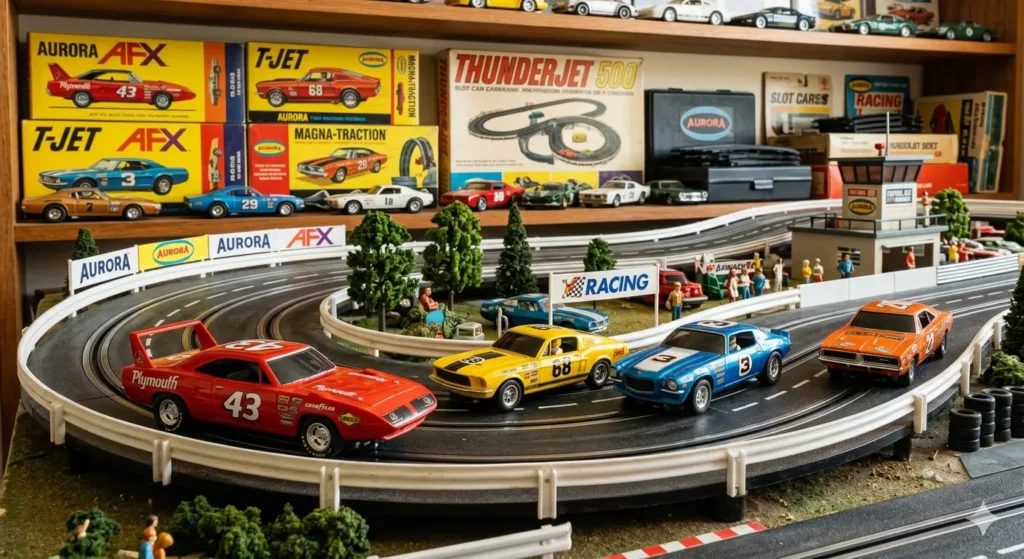
Vintage Aurora HO Slot Cars: A Collector’s Guide to History Value and What to Buy
Open a dusty box in someone’s attic and find a tangle of orange track and tiny plastic race cars, and there’s a decent chance you’re holding a piece of Aurora’s history. Through the 1960s and ’70s, Aurora turned HO-scale slot car racing into a genuine American living-room phenomenon, and decades later, the hobby never really went away — it just moved from basements into a serious collector market.
This guide covers what these cars actually are, why certain models command real money today, and how to buy, care for, and sell them without making the mistakes that cost new collectors money.
What Made These Cars a Big Deal
An Aurora HO slot car is a small electric race car built to run on a narrow slotted track, guided by a rail beneath the car and powered by low-voltage electricity running through the track itself. A handheld controller lets each racer adjust speed, and the skill of the hobby comes down to threading the needle between going fast and flying off the track on a tight curve.
Aurora wasn’t the only company making these, but it became the name most associated with the hobby’s golden era — largely because the company kept pushing out new car designs, new track layouts, and pricing that made the sets accessible to ordinary families rather than just hardcore hobbyists.
The Two Eras Every Collector Should Know
Thunderjet models represent Aurora’s earlier, foundational line — these cars have real historical weight in the hobby, known for smooth handling rather than blistering speed. Models like the Thunderjet Mustang, Corvette, Jaguar, and Ford GT are the ones collectors point to when they talk about where the hobby really took shape.
AFX models came later and turned up the speed considerably, becoming the choice for racers who wanted a faster, more competitive experience. The AFX Corvette, Porsche, Camaro, and Ferrari all built strong followings and remain popular with people racing rather than just displaying.
Broadly, if you’re chasing history and nostalgia, Thunderjet is where the story starts. If you want something closer to actual competitive racing, AFX is the better entry point.
What Actually Makes a Car Valuable
Value in this hobby isn’t just about age — plenty of common Aurora cars from the era are worth relatively little. What moves the needle is a combination of factors: how limited the original production run was, whether the car came in an unusual factory color, whether it was a promotional or special-release model, and — probably the single biggest factor — condition. A mint, complete example with its original box will often sell for multiples of what the same car in rough, incomplete shape would fetch. Serious collectors specifically hunt for rare Thunderjet variants, limited AFX runs, promotional releases, and factory-sealed examples that were never even opened.
Spotting an Authentic Aurora Car
Reproductions and mismatched parts are common enough in this hobby that it’s worth knowing what to check. Genuine Aurora cars should show consistent factory branding, the correct original chassis design for that specific model, factory-applied paint (not a repaint), period-correct wheels, and a motor design that matches known Aurora specifications. If a car has missing components, an obvious repaint, heavy visible damage, or parts that don’t match known original specs, treat it with real skepticism — cross-reference with a trusted collector’s guide before paying real money for anything you’re unsure about.
Starting a Collection Without Overspending
New collectors are generally better off starting with common, easier-to-find models — a Thunderjet Mustang or Camaro, an AFX Corvette or Porsche — rather than chasing rare pieces right out of the gate. These give you a feel for the hobby, teach you what “condition” actually means in practice, and cost far less to learn on. Once you’ve got a handle on what you’re looking at, moving toward rare colors, limited editions, and factory-sealed pieces makes a lot more sense.
Where to Actually Find These Cars
Collector shows and swap meets tend to offer the best mix of selection and knowledgeable sellers who can answer questions on the spot. Dedicated hobby shops sometimes carry vintage stock, and estate sales occasionally turn up complete childhood collections at reasonable prices — though you’ll need to know what you’re looking at, since sellers often don’t. Online marketplaces widen your search considerably but raise the stakes on verifying authenticity and condition from photos alone, so ask for detailed, well-lit images before committing to anything expensive.
If You’re Selling Instead of Buying
A clean, honest listing sells faster and for more money than a rushed one. Clean the car carefully before photographing it, shoot clear photos from multiple angles, and describe the condition accurately — including any damage, missing parts, or repairs, rather than glossing over flaws. Buyers in this hobby tend to be knowledgeable, and a listing that’s upfront about issues builds more trust (and often better final prices) than one that oversells.
Keeping a Collection in Good Shape
Store cars somewhere dry and out of direct sunlight, since both moisture and UV exposure degrade plastic and paint over time. Dedicated storage cases protect against dust and accidental damage far better than a loose box. Handle rare pieces carefully and sparingly — the wear from repeated handling adds up. If you still have original boxes, keep them; packaging alone can meaningfully affect resale value years down the line.
Track Maintenance Matters Too
A dirty track slows cars down and creates a frustrating racing experience regardless of how good the cars themselves are. Disconnect power before cleaning, wipe the track surface gently to remove built-up dust, and pay particular attention to the metal contact rails, since grime there directly reduces the electrical connection powering the cars. A few minutes of track cleaning before a race session makes a noticeable difference in how smoothly everything runs.
Vintage Aurora vs. Modern Slot Cars
| Feature | Vintage Aurora | Modern slot cars |
|---|---|---|
| Nostalgia factor | High | Low |
| Collector value | High | Moderate |
| Technology | Basic | Advanced |
| Rarity | High | Low |
| Historical significance | High | Low |
Modern slot cars generally offer more refined technology and consistency, but they don’t carry the same collector weight or historical story — which is exactly why plenty of hobbyists keep coming back to the vintage stuff even with newer options available.
Finding Your People in the Hobby
Slot car collecting has an active, generally welcoming community built around swap meets, online forums, and local clubs. Experienced collectors are often happy to help newcomers identify a car, estimate value, or point out red flags on a potential purchase. If you’re serious about building a real collection rather than just picking up a few nostalgic pieces, connecting with other collectors will teach you more, faster, than researching alone.
Getting Started the Right Way
Building a meaningful collection takes patience more than money. Start with common, well-understood models, learn to genuinely tell Thunderjet and AFX cars apart, prioritize condition over chasing rarity too early, and set a budget you’re comfortable sticking to. Rushing into rare, expensive pieces before you understand what you’re looking at is the single most common way new collectors end up disappointed — or overpaying for something that turns out to be less than advertised.
Quick Questions, Straight Answers
What’s the real difference between Thunderjet and AFX cars? Thunderjet cars are the older, foundational line known for smooth handling; AFX cars came later and offer noticeably faster performance.
Are these cars actually worth money? Some are, particularly rare colors, limited releases, and mint-condition examples with original packaging — common models in rough shape are worth much less.
How can I tell if a slot car is genuinely original? Check the branding, chassis design, wheel style, and motor against a trusted collector reference; be wary of repaints or mismatched parts.
Does the original box actually matter for value? Yes, meaningfully — original packaging is one of the bigger factors buyers look for.
Is this a good hobby to get into as a beginner? Yes, especially if you start with common, affordable models and take time to learn before chasing rare pieces.
Can kids race these safely? Yes, generally, though adult supervision helps with younger children given the small parts and handling care these cars need.