Trucks and SUVs Guide Big Vehicles for Work and Family
Walk through any parking lot today and trucks and SUVs outnumber everything else. That’s not an accident. A truck hauls heavy loads and tows trailers without breaking a sweat, while an SUV wraps a family in comfort, safety, and enough room for every bag, backpack, and stroller life throws at it. The trick is knowing which one actually fits how you live — not just which one looks good in the driveway.
Truck or SUV What the Actual Difference?
Both ride higher than a sedan, both tend to pack stronger engines, and both give you noticeably more room inside. That’s where the similarities end.
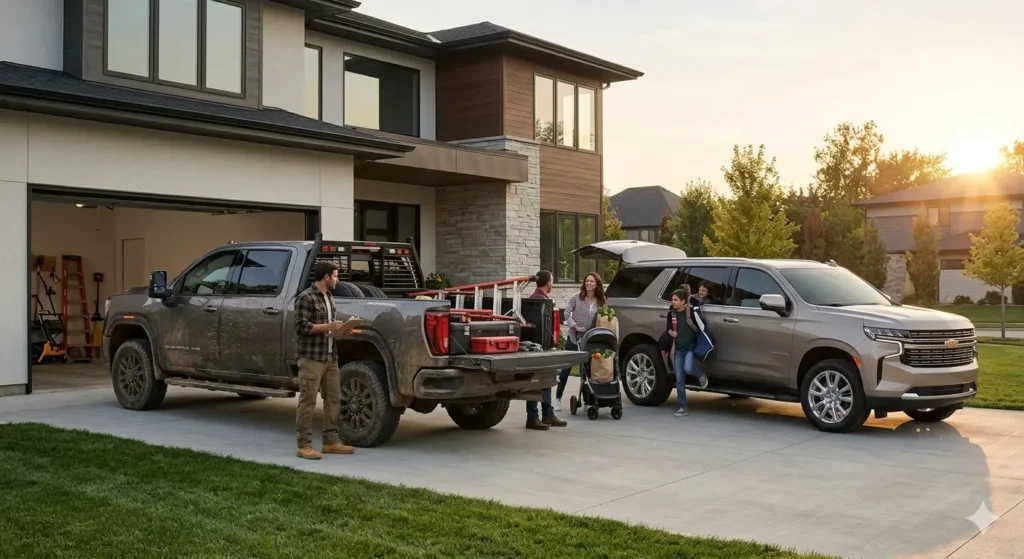
A truck carries an open bed at the back. It’s built for things a trunk was never meant to hold — lumber, tools, dirt bikes, anything messy or oversized. An SUV closes that space off entirely, turning it into a secure spot for luggage and groceries, and in many models, stretching it further with a third row of seats for extra passengers.
Put simply: if your cargo needs to breathe, get a truck. If your cargo needs to stay dry and locked up, get an SUV.
Sizes Within Each Category
Trucks come in three rough sizes. Compact trucks suit city driving and weekend projects — easy to park, cheap to fuel. Mid-size trucks split the difference, towing respectable loads while still working fine as a daily commuter. Full-size trucks are the job-site workhorses, hauling equipment that would overwhelm anything smaller.
SUVs scale the same way. Compact SUVs work well for new drivers or small households. Mid-size SUVs give growing families breathing room for longer trips. Full-size SUVs go all-in on capacity — big groups, big cargo, no compromise.
Where Each One Actually Shines
Families gravitate toward SUVs because life rarely stays predictable. One trip it’s kids and sports gear, the next it’s a grocery haul and a dog crate. Flexible fold-flat seating, easy entry for young kids and grandparents, and a long list of built-in safety tech make that unpredictability manageable rather than stressful.
Work crews lean on trucks for the opposite reason — predictability of a different kind. Contractors load beds with lumber and tools every single day, tow trailers stacked with equipment, and need a vehicle that shrugs off dirt and weight. Some SUVs handle lighter work tasks too, offering enclosed storage where security matters more than raw capacity, but for daily job-site abuse, the truck bed still wins.
| Feature | Truck | SUV |
|---|---|---|
| Open Cargo Bed | Yes | No |
| Family Seating | Good | Excellent |
| Heavy Towing | Excellent | Good |
| Daily Driving Comfort | Good | Excellent |
| Cargo Security | Fair | Excellent |
| Job-Site Work | Excellent | Good |
Tech and Safety Have Both Come a Long Way
The infotainment features that used to sit exclusively in luxury cars — touchscreens, wireless charging, smartphone integration, built-in navigation — now show up standard on mid-range trucks and SUVs alike. Heated seats and backup cameras aren’t a splurge anymore; they’re expected.
Safety has advanced just as fast. Blind-spot monitoring, lane-departure alerts, automatic emergency braking, and stability control now come bundled into most new models, and they’ve meaningfully cut down on accident rates. None of that replaces an alert driver, though — the tech assists, it doesn’t take over.
Fuel Costs and the Off-Road Question
Size drives fuel use more than almost anything else. Compact models sip less than their full-size cousins, simply because they’re lighter and carry smaller engines. What’s changed recently is that even full-size trucks and SUVs now stretch further per gallon than they did a decade ago, and hybrid or electric SUVs give buyers a genuinely efficient option without giving up space.
For anyone who camps, hikes, or drives unpaved roads regularly, four-wheel drive, raised ground clearance, aggressive tires, and skid plates matter more than fuel economy ever will. Not every truck or SUV comes with these — check the trim level carefully before assuming a model can handle rough terrain.
Figuring Out What You Actually Need
Before comparing spec sheets, answer a few honest questions: How many people ride with you regularly? Do you tow anything — a boat, a camper, a trailer? Do you haul large or dirty items often enough that a bed matters? What’s your real budget, not the aspirational one? And what kind of roads do you actually drive, day to day?
Those five answers narrow the field faster than any brochure will.
| Need | Best Choice |
|---|---|
| Family trips | SUV |
| Heavy hauling | Truck |
| Daily commuting | SUV |
| Construction work | Truck |
| Camping trips | SUV or Truck |
| Trailer towing | Truck |
What Trips Up First-Time Buyers
Most buying mistakes come down to the same handful of oversights: choosing a model for looks rather than function, ignoring what fuel will actually cost over five years, skipping the test drive because a model looks fine on paper, underestimating how much cargo space daily life requires, and — probably the most common one — buying more truck than the job ever calls for.
Before signing anything, set a firm budget first, drive more than one option back to back, check safety ratings from a source like IIHS or NHTSA, and read the warranty terms closely rather than skimming them.
The Bottom Line
Trucks and SUVs stay popular because they solve real problems — space, power, comfort, flexibility — that smaller cars simply can’t. A truck earns its keep hauling and towing. An SUV earns its keep keeping a family comfortable and safe on every kind of trip. The best choice isn’t the flashiest one on the lot; it’s the one that quietly fits how you already live.
Questions People Often Ask
What’s the real difference between a truck and an SUV? A truck has an open bed for hauling; an SUV has an enclosed cabin built around passengers and gear.
Which one’s actually better? Depends on the job — towing and hauling favor trucks, comfort and daily family use favor SUVs.
Are SUVs a solid pick for families? Generally yes, thanks to flexible seating and secure cargo space.
Can a truck handle serious towing? Most trucks are built specifically for it — trailers, boats, campers, all fair game.
Do SUVs burn less fuel than trucks? Usually, especially in the compact and mid-size range.
Is a truck practical for everyday driving? Plenty of owners drive one daily without issue, particularly compact and mid-size models.
What makes an SUV worth the price for most families? The combination of comfort and enclosed, secure storage.
Are trucks costly to maintain? It varies a lot by model, size, and how hard it gets used.
Can SUVs actually go off-road? Many can, especially four-wheel-drive trims — but check before assuming.
Are today’s trucks and SUVs genuinely safe? Most carry solid safety tech now, though careful driving still matters more than any feature.