Synergy Auto Care NC What to Look For in a Trusted Auto Repair Shop
Anyone can change their own oil in a driveway on a Saturday afternoon. Fewer people can diagnose why a dashboard light won’t turn off, or tell whether a strange sound is a $50 fix or a $1,500 one. That’s the real value a trusted local auto care center brings — not just performing services, but knowing which service actually solves the problem in front of them. This guide covers what a shop like Synergy Auto Care NC typically offers, how to evaluate whether a repair center deserves your trust, and how modern diagnostics have changed what “getting your car checked” actually means.
What a Full-Service Auto Care Center Actually Does
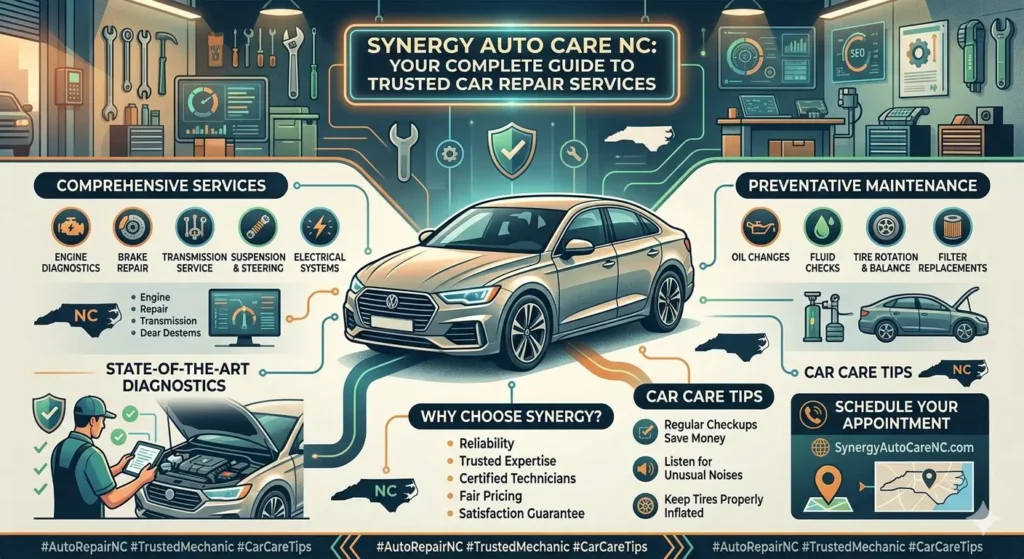
A well-rounded shop covers far more than oil changes. Expect a solid provider to handle tire rotations and balancing, brake inspections and repair, battery testing, engine diagnostics, wheel alignment, air filter replacement, cooling system checks, fluid replacement, and general vehicle inspections. The value isn’t any single service on that list — it’s having one place that can competently handle whatever a car needs across its lifetime, instead of bouncing between specialists for every different issue.
Why the Right Shop Matters More Than Any Single Repair
A car maintained consistently by people who actually know its history tends to run better, last longer, and cost less over time than one passed between whichever shop happens to be closest each time something breaks. Clean engine oil protects internal components from wearing down. Fresh, properly balanced tires improve both grip and fuel efficiency. Brakes that are inspected regularly catch wear before it becomes a safety issue rather than after. None of this requires a specific brand of shop — it requires a shop that’s actually paying attention.
Where Diagnostics Changed the Game
Older cars mostly announced problems through sound, smell, or feel — a mechanic’s trained ear and experience did most of the diagnostic work. Modern vehicles are different. They run on onboard computers that continuously monitor dozens of systems, and a proper diagnostic scan can pull specific fault codes that point directly at what’s wrong, often before a driver notices anything unusual at all.
This matters practically: a shop with real diagnostic capability can often identify a problem in minutes that would otherwise take hours of guesswork, and that speed translates directly into lower labor costs and fewer unnecessary parts replaced “just in case.” If a shop doesn’t run diagnostics as standard practice on anything beyond basic services, that’s worth noticing.
Breaking Down the Core Services
Oil changes remain the most frequent service for good reason — oil keeps engine components moving smoothly, and it degrades steadily with use. Old, dirty oil stops protecting the engine the way fresh oil does, which is why staying on schedule matters more than most drivers assume.
Brake service deserves particular attention since it’s the one system where delay carries real consequences. Worn brake components reduce stopping power gradually, often without a driver noticing day to day, until the difference becomes dangerous in an emergency stop.
Tire care covers more ground than most drivers expect — rotation for even wear, pressure checks for both safety and fuel economy, balancing to prevent vibration and uneven wear, and timely replacement once tread depth drops below a safe level.
Engine diagnostics, as covered above, has become one of the most valuable tools a shop offers, turning vague symptoms into specific, actionable findings.
Signs Worth Bringing to a Shop’s Attention
Cars tend to signal trouble well before a full breakdown: unusual noises, illuminated warning lights, fuel economy that’s dropped noticeably, difficulty starting, vibration while driving, brake squeaking, or an engine that’s running hotter than normal. A small brake issue, left alone, can develop into a genuine safety concern — which is exactly why these signs are worth addressing as soon as they appear rather than after they’ve had time to worsen.
What Professional Care Actually Buys You
Working with skilled technicians rather than attempting every fix solo (or ignoring problems entirely) pays off in a few measurable ways. Safety improves, since professionals know precisely what to check on brakes, tires, and steering systems that a casual glance would miss. Reliability improves too — vehicles maintained consistently simply break down less often, which builds real confidence behind the wheel. Vehicles also tend to last longer under consistent professional care, since regular maintenance protects the components most likely to fail early if neglected. And over time, preventive care reliably costs less than reactive repair, since catching problems early avoids the cascading damage that comes from ignoring them.
A General Service Timeline
| Service | Suggested Timing |
|---|---|
| Oil Change | Every few months |
| Tire Rotation | Regularly |
| Brake Inspection | During routine service |
| Battery Check | At least once a year |
| Air Filter Check | Regular intervals |
| Coolant Inspection | During maintenance visits |
| Fluid Checks | Frequently |
These are general guidelines — your specific vehicle’s owner’s manual will have manufacturer-recommended intervals that should take priority, since different engines and components wear at different rates.
How to Actually Evaluate a Repair Shop
The difference between a shop worth returning to and one worth avoiding usually shows up in the details. Look for friendly, clear communication rather than jargon-heavy explanations meant to rush a decision. A clean, organized facility is often a decent proxy for how carefully a shop handles the actual mechanical work. Skilled, experienced technicians matter more than flashy marketing. Genuine customer reviews — not just the ones featured on the shop’s own website — tend to reveal the real experience other drivers had. And a trustworthy shop discusses costs upfront, before starting any work, rather than surprising you with the bill afterward.
Ask questions before agreeing to a repair. A shop confident in its own work will walk you through exactly what’s wrong, why, and what the fix involves — without getting defensive when you want to understand the reasoning.
Everyday Habits That Complement Professional Care
Regular shop visits work best alongside a few small habits at home: checking tire pressure periodically, staying on schedule with oil changes rather than stretching intervals, listening for anything that sounds different than usual, paying attention to dashboard warning lights the moment they appear, keeping fluid levels topped off, washing the vehicle regularly, and actually booking routine inspections instead of only showing up once something’s already broken.
The Bottom Line
A trusted local auto care center does more than turn wrenches — it catches problems early, explains them honestly, and keeps a car running the way it should for years rather than months. Whether it’s a routine oil change or a diagnostic scan tracking down a stubborn warning light, the value comes from consistency and expertise, not any single visit. Finding a shop that delivers both is worth the effort of shopping around before you actually need one urgently.
Frequently Asked Questions
What kinds of services does a full auto care center typically offer? Oil changes, brake work, tire care, engine diagnostics, alignment, fluid replacement, and general inspections make up the core lineup.
Why does regular car maintenance matter so much? It catches small issues while they’re still cheap and simple to fix, improving both safety and vehicle lifespan.
How often should I get my oil changed? Follow your specific vehicle manufacturer’s recommendation, since intervals vary by engine and oil type.
Why do my brakes make noise sometimes? It usually signals worn brake components that need inspection, and possibly replacement, soon.
What actually happens during a diagnostic scan? A technician connects to the car’s onboard computer to pull fault codes that point directly to specific system issues.
Why should I bother rotating my tires? It spreads wear evenly across all four tires, extending their life and keeping handling predictable.
What does a dashboard warning light generally mean? It signals that some system needs attention, ranging from minor to genuinely urgent depending on the specific light.
Can consistent maintenance actually save money? Yes — reliably, since catching problems early is almost always cheaper than the repairs that come from ignoring them.
How do I know if a repair shop is actually trustworthy? Look for transparent pricing, honest explanations, strong independent reviews, and technicians willing to answer questions.
What’s the best way to extend my car’s lifespan? Combine a consistent professional maintenance schedule with basic daily habits like checking fluids and tire pressure.