
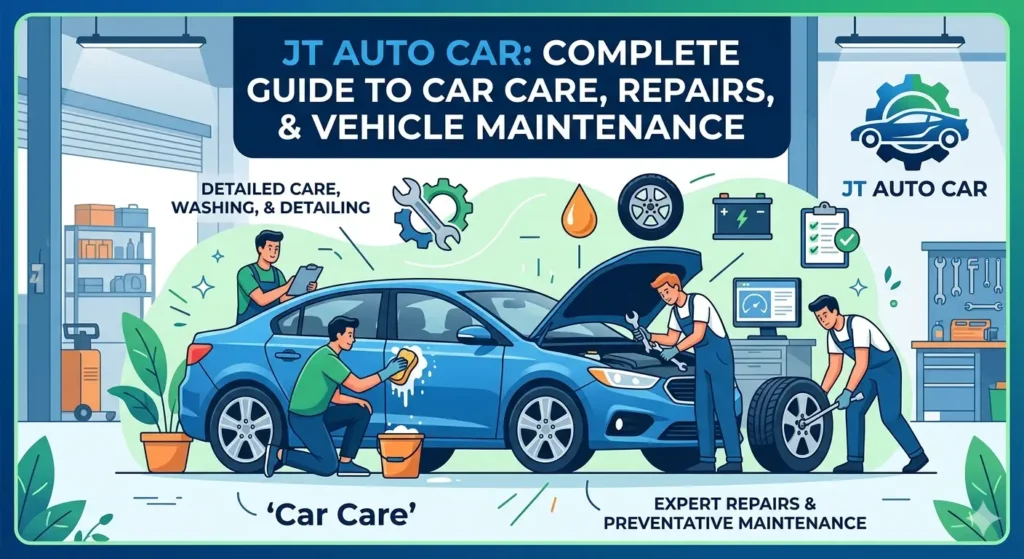
JT Auto Car: A Practical Guide to Repairs and Ongoing Maintenance
Every car owner eventually faces the same choice: stay ahead of maintenance, or react to problems as they show up. The first path costs a little time and money on a regular basis. The second path costs a lot more, usually at the worst possible moment — a dead battery on a cold morning, a brake failure warning on the highway, an engine light that turns into a tow truck call. This guide walks through what regular auto care actually involves, how to read the warning signs your car gives you, and what separates a repair shop worth trusting from one that isn’t.
The Real Cost of Skipping Maintenance
Cars don’t usually break down without warning — they tend to send signals for weeks or months before a part actually fails. A slightly noisy engine. A dashboard light that’s easy to dismiss. Brakes that feel a little softer than they used to. Each of those is a chance to fix something small before it becomes something expensive.
That’s the entire logic behind preventive maintenance: a repair caught early is almost always cheaper, faster, and less disruptive than the same problem caught late. An oil change costs a fraction of what an engine rebuild does. A brake pad swap costs far less than a full brake system failure. The math consistently favors staying ahead of problems rather than waiting for them.
The Services That Do the Heavy Lifting
A handful of routine services account for most of what keeps a car reliable: oil changes, brake repair, tire service, battery testing, engine checks, fluid replacement, air filter swaps, wheel alignment, and periodic inspections. None of these are glamorous, but together they cover nearly every system that’s likely to fail if left unattended.
Reading Your Engine’s Oil Like a Health Report
Oil exists to keep an engine’s internal parts moving smoothly against each other without grinding themselves down. It does that job well when it’s fresh — and progressively worse as it breaks down and picks up contamination over time. A few clues tell you it’s time for a change: the oil itself looks noticeably darker, the engine sounds rougher or louder than normal, a warning light appears, or fuel economy quietly drops without an obvious reason. Sticking to your manufacturer’s recommended interval, rather than guessing, is the safest way to stay ahead of engine wear.
Brakes Don’t Get a Second Chance
Of everything on a car, brakes are the one system where delaying a repair carries real risk. A few signs mean it’s time to get them looked at without putting it off: squeaking during normal braking, grinding that usually means the pads have worn through to metal, a brake pedal that feels softer or sinks further than it should, or a stopping distance that’s noticeably longer than it used to be. None of these situations improve on their own — they tend to escalate, both in danger and in eventual repair cost.
Tires: Small Details, Big Consequences
Every ounce of control a driver has over a moving car passes through the tires. That makes their condition worth checking far more often than most drivers actually do. The basics matter more than any high-tech feature: correct air pressure, regular rotation for even wear, tread depth that hasn’t dropped below a safe threshold, and prompt replacement once a tire is genuinely worn or damaged. Tires that are properly maintained don’t just last longer — they measurably improve how safely and smoothly a car handles.
A Battery That Won’t Surprise You
Batteries have an unfortunate habit of failing without much warning, usually at the least convenient time possible. Watching for a few early signals helps avoid getting stranded: the engine cranking more slowly than it used to when starting, headlights or interior lights that seem dimmer than normal, or a battery-specific warning on the dashboard. A yearly battery test is a small step that consistently prevents a much bigger inconvenience.
What Your Car Is Trying to Tell You
Beyond the specific systems above, cars tend to broadcast trouble in fairly recognizable ways: unusual noises, dashboard warning lights, engine shaking or rough idling, harder-than-normal starting, a noticeable drop in fuel economy, brake noise, or the smell of something burning. Each of these is worth investigating rather than dismissing — they’re rarely random, and they’re almost always cheaper to address early than late.
What a Trained Technician Actually Brings to the Table
A skilled mechanic doesn’t just fix what’s obviously broken — they know how to trace a symptom back to its actual cause, often using diagnostic tools that go well beyond what’s visible during a casual inspection. That expertise pays off in a few concrete ways: better safety, since professionals know exactly what to check on brakes and tires; better long-term reliability, since properly maintained vehicles break down noticeably less often; a longer overall vehicle lifespan, since preventive care protects the components that would otherwise fail early; and lower costs over time, since catching problems early consistently beats paying for major repairs later.
A General Maintenance Timeline
| Service | Suggested Timing |
|---|---|
| Oil Change | Every few months |
| Tire Rotation | Regularly |
| Brake Check | At every service visit |
| Battery Test | Once a year |
| Air Filter Check | Regularly |
| Fluid Check | Frequently |
| Vehicle Inspection | As recommended |
Treat this as a starting point rather than gospel — your owner’s manual will have manufacturer-specific intervals tailored to your exact engine and components, and those numbers should take priority.
Choosing a Shop That Won’t Waste Your Time or Money
A good repair shop is easy to spot once you know what to look for: staff who explain problems clearly instead of using jargon to rush you into a decision, technicians with real hands-on skill, a clean and organized work environment, honest recommendations rather than upselling, strong reviews from past customers, and transparent pricing before any work begins. Don’t hesitate to ask questions before agreeing to a repair — a shop worth your business will answer them without pushback.
Habits Worth Building Into Your Routine
A short list of consistent habits does more for a car’s longevity than any single big repair ever could: checking tire pressure on a regular basis, changing oil on schedule rather than pushing past it, washing the car regularly (which protects more than just appearance), paying attention to warning lights the moment they appear, listening for anything that sounds different than usual, keeping fluid levels topped off, and actually booking the inspections instead of skipping them because the car “seems fine.”
The Bottom Line
Regular auto care isn’t about chasing perfection — it’s about catching small problems while they’re still small. Oil changes protect the engine. Brake service protects everyone on the road, including the driver. Tire care keeps a car planted and controllable. Battery checks prevent the kind of morning that starts with a dead car and a rescheduled day. None of it requires deep mechanical expertise, just consistency and a willingness to act on the warning signs a car gives before something breaks. Do that, and a vehicle tends to stay safer, more reliable, and considerably cheaper to own over the years.
Frequently Asked Questions
What kind of services does routine auto care typically cover? Oil changes, brake inspections, tire service, battery testing, and general vehicle checks make up most of what regular maintenance involves.
Why does staying on top of maintenance matter so much? It catches problems while they’re cheap and simple to fix, rather than letting them grow into major repairs.
How often should engine oil actually get changed? It depends on the vehicle and oil type — check your owner’s manual for the manufacturer’s specific recommendation.
Why do brakes sometimes make a squeaking sound? It usually means the brake pads are wearing down and should be inspected soon.
What’s the most effective way to extend a car’s lifespan? Sticking to a consistent maintenance and repair schedule rather than only reacting once something fails.
Why does tire rotation matter? It spreads wear evenly across all four tires, which extends their life and keeps handling consistent.
What does it mean when a dashboard warning light turns on? It’s the vehicle’s way of signaling that something needs attention, ranging from minor to urgent.
How often should a battery get tested? At minimum once a year, ideally timed before the coldest stretch of winter.
Can consistent maintenance genuinely lower repair costs? Yes — catching issues early is reliably cheaper than dealing with the bigger problems they turn into if ignored.
What should I look for when picking an auto repair shop? Skilled technicians, honest communication, transparent pricing, and solid reviews from other customers.