
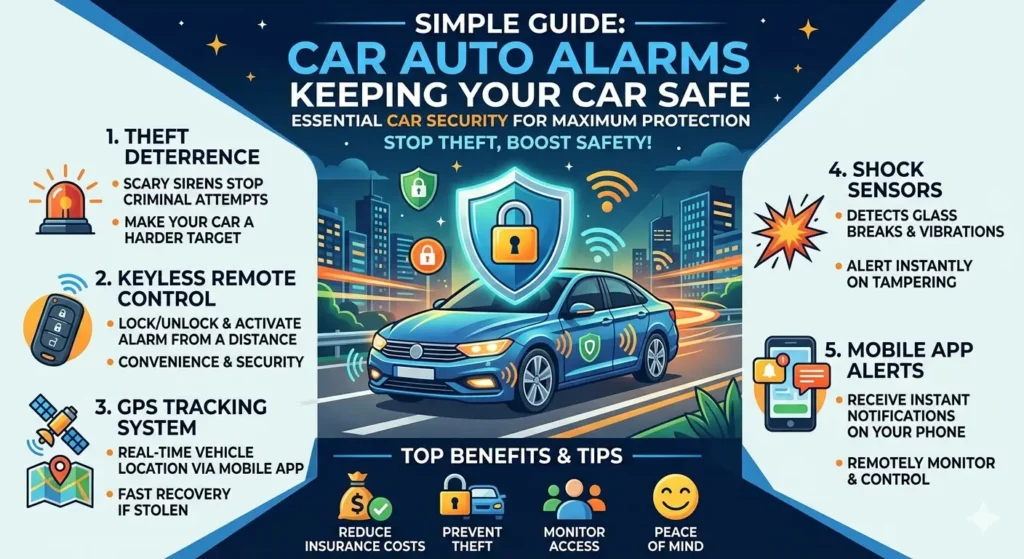
Car Auto Alarms: A Practical Guide to Keeping Your Car Safe
A parked car sitting on a dark street is an easy target — unless it isn’t. A loud siren going off the moment someone tries the door handle changes the math for a would-be thief almost instantly: most aren’t looking for a fight with attention, they’re looking for an easy score. That’s the entire premise behind a car alarm, and it’s why so many drivers still consider one a basic, non-negotiable layer of vehicle security even as cars get smarter on their own.
What a Car Alarm Actually Does
At its core, a car alarm is a security system built to detect unauthorized access or tampering and respond loudly enough to draw attention. The noise itself is the deterrent — most thieves want speed and anonymity, and a blaring siren offers neither. Beyond scaring off an opportunist, many modern systems now do more: flashing lights, sending a push notification to your phone, or even pinpointing the vehicle’s location if it does get taken.
How the System Actually Works
Underneath the siren sits a network of sensors constantly watching for specific triggers — a locked door being forced open, a window breaking, the vehicle being moved or towed, a hard impact against the body, or any entry attempt that doesn’t come through the correct key or fob. The moment a sensor picks up one of these, the system activates: the siren sounds, lights often flash in sync, and on more advanced setups, an alert lands on the owner’s phone within seconds.
A typical system is built from a handful of core parts working together — a control unit that processes sensor input, the siren itself, the sensors placed around the vehicle, a remote control for the driver, and the wiring that ties it all together. Each piece plays a specific role, and a failure in any one of them can compromise the whole system.
Why Bother With an Alarm at All
Cars represent a serious financial investment, and protecting that investment matters to most owners regardless of the vehicle’s age or value. An alarm doesn’t guarantee a car will never be touched, but it does shift the odds meaningfully — a thief who triggers a loud siren mid-attempt is far more likely to abandon the effort and move to an easier, unprotected target nearby. That deterrent effect, more than any single feature, is what makes alarms worth having.
The Different Types Worth Knowing About
Not every alarm system operates the same way, and picking the right type comes down to how hands-on you want to be.
Passive alarms arm themselves automatically the moment you leave the vehicle, with no button-pressing required — a “set it and forget it” approach that suits drivers who don’t want to think about it.
Active alarms need a manual step, typically pressing a button on a remote, to arm and disarm. Some drivers actually prefer this — it gives a clear, deliberate confirmation that the system is engaged.
Two-way systems go a step further, sending confirmation back to the remote or phone when the alarm activates. That feedback loop is genuinely useful if the car is parked somewhere out of earshot, since you’ll know the moment something triggers it rather than finding out later.
Smartphone-connected systems tie the alarm into a mobile app, letting an owner check status, receive alerts, or even locate the vehicle from virtually anywhere with a signal. This has become the preferred option for a growing number of drivers who want visibility into their car’s security without being physically nearby.
Features Worth Paying Attention To
Beyond the basic siren-and-sensor setup, several add-on features genuinely change how much protection a system provides. Shock sensors detect physical impacts against the car, catching attempts that don’t involve opening a door. Motion sensors pick up movement around or inside a parked vehicle. Glass-break detection adds a layer specifically aimed at smash-and-grab attempts, which don’t always trigger a standard door sensor. Remote start adds a convenience feature unrelated to security but genuinely useful on cold mornings. GPS tracking becomes invaluable after the fact — if a theft does happen, it dramatically improves the odds of recovery. And smartphone alerts tie the whole system together, giving near-instant notification the moment something happens rather than discovering it later.
Choosing the Right System for Your Situation
Start by being honest about what you actually need — someone parking in a secured garage every night has different requirements than someone parking on a busy city street. From there, set a realistic budget, since prices range widely from basic setups to feature-loaded systems with GPS and app connectivity. Focus on features you’ll genuinely use rather than paying extra for capabilities that sound impressive but won’t factor into daily life. Reading actual customer reviews helps separate marketing claims from real-world reliability. And factor in installation — some systems are simple enough to install yourself, while others, particularly ones tied into a vehicle’s electrical system, are worth having a professional handle.
Comparing Basic and Advanced Systems
| Feature | Basic Alarm | Advanced Alarm |
|---|---|---|
| Loud Siren | Yes | Yes |
| Remote Control | Yes | Yes |
| Shock Sensor | Yes | Yes |
| GPS Tracking | No | Yes |
| Smartphone Alerts | No | Yes |
| Remote Start | No | Yes |
| Two-Way Communication | No | Yes |
Where Installation Actually Happens
Professional installation tends to produce more reliable results, largely because technicians know exactly where each component needs to sit for the system to function properly. Sensors and wiring commonly run through the dashboard, under seats, inside the engine compartment, and along door panels — and the specific configuration should always follow the manufacturer’s guidelines rather than generic placement.
Signs a System Needs Attention
Like any electronic system, car alarms can develop problems over time. Watch for frequent false alarms, a siren that sounds noticeably weaker than it used to, a remote that stops responding reliably, sensors that fail to trigger correctly, or battery issues in either the vehicle or the remote itself. None of these should be brushed off — a malfunctioning alarm offers a false sense of security at exactly the moment real protection matters.
Keeping a System Working Reliably
A little routine care keeps an alarm system trustworthy over the long run. Test it periodically rather than assuming it still works. Replace weak batteries — in both the remote and, if applicable, any standalone sensor units — before they fail completely. Check sensors occasionally to confirm they’re still responding correctly. Keep the remote control itself clean and functional. And address any issue as soon as it appears rather than letting a minor glitch turn into a system that no longer protects the car at all.
An Alarm Is One Layer, Not the Whole Strategy
It’s worth being clear-eyed here: no alarm system guarantees a car will never be broken into or stolen. What it does is meaningfully raise the difficulty and risk for anyone attempting it, which is often enough to redirect a thief toward an easier target. Pairing an alarm with basic habits — actually locking the doors, parking in well-lit areas, and keeping valuables out of sight — closes most of the gaps a system alone can’t cover.
The Bottom Line
A car alarm remains one of the simplest, most effective ways to add a real layer of security to a parked vehicle. Modern systems go well beyond a loud siren, offering GPS tracking, instant smartphone alerts, and two-way confirmation that give owners genuine visibility into their car’s safety. The right choice depends on how much protection actually fits your situation — but paired with basic precautions and a little routine maintenance, even a straightforward alarm system meaningfully lowers the odds of ever dealing with a stolen or broken-into car.
Frequently Asked Questions
What exactly does a car alarm protect against? It’s designed to detect unauthorized entry, tampering, or movement, and respond with a loud alert to deter theft.
Do alarms genuinely stop thieves? They significantly discourage many, since the noise draws attention and most thieves prefer to avoid that risk entirely.
Can a car alarm actually notify my phone? Yes — many modern systems connect to a mobile app and send real-time alerts the moment the alarm triggers.
Is investing in a car alarm actually worth it? For most drivers, yes — the added security and peace of mind generally outweigh the cost.
How long do car alarm systems typically last? With reasonable care, many systems remain reliable for several years before needing replacement or upgrade.
Can weather affect how well an alarm works? Yes — extreme heat or cold can impact sensor performance and battery life over time.
Do all cars come with a built-in alarm system? No — it varies by manufacturer and model, so it’s worth checking rather than assuming.
What usually causes false alarms? Weak batteries, faulty sensors, or an installation issue are the most common culprits.
Can I install a car alarm myself? Some simpler systems support DIY installation, while more advanced setups tied into the vehicle’s wiring usually call for a professional.
What feature do most drivers find most valuable in modern systems? GPS tracking and smartphone alerts tend to top the list, since they extend protection well beyond the moment the alarm sounds.