
Side Marker Lights: The Small Lights Most Drivers Never Think About
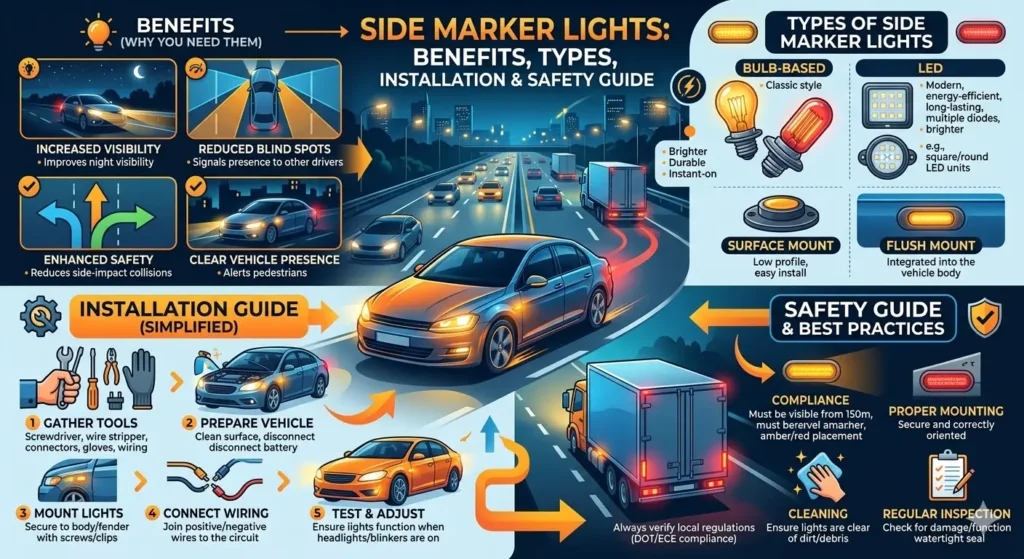
Headlights and taillights get all the attention, but there’s a smaller light doing a different job: the side marker. Mounted along the front and rear flanks of a vehicle, its purpose isn’t to light anything up — it’s to let other drivers judge where your car actually starts and ends, especially from an angle your headlights and taillights can’t cover.
What They’re Actually For
A car approaching from a side street, or a driver merging past a trailer at night, doesn’t get much useful information from headlights and taillights alone — those only face forward and backward. Side markers fill that gap, making a vehicle’s full length and position visible from angles the other lights simply don’t reach. This matters most in low light, fog, or heavy rain, when the margin for someone misjudging a vehicle’s position gets a lot smaller.
On most vehicles, the front markers show amber and the rear markers show red, matching the color logic of the headlights and taillights they sit near.
LED, Incandescent or Smoked What’s the Real Difference
LED side markers dominate newer vehicles for good reason: they draw less power, run brighter, and last years longer than the alternative. If you’re upgrading rather than doing a stock replacement, this is the type most people land on.
Incandescent markers are the older, cheaper standard. They work fine and cost less upfront, but the bulbs burn out faster and need replacing more often — a tradeoff that’s fine for some budgets and annoying for others.
Smoked markers use a darker lens purely for looks, giving a more custom, blacked-out appearance. Worth knowing before you buy: a smoked lens can reduce how bright and visible the light actually is, so it’s worth checking that your specific product still meets legal brightness requirements before installing it.
Installing or Replacing Them
Confirm fitment before you buy anything. Side marker housings aren’t universal — checking your vehicle’s specific requirements first saves a return trip.
Turn the vehicle off before you start. This is a small job, but working around live wiring while the electrical system is powered is an easy way to cause a short.
Check your local lighting laws, particularly if you’re switching to a colored or smoked lens. Marker light rules — color, brightness, placement — vary by state, and this is the step most likely to get skipped.
Test every light before driving, not just the one you replaced. A quick walk-around with the lights on catches a loose connection before it becomes a ticket or, worse, a visibility problem on the road.
Where People Run Into Trouble
The most common mistake is buying a light without confirming it fits the vehicle — markers vary enough between makes that a “universal” listing doesn’t always mean universal. The second is skipping the local lighting laws entirely, especially with colored or tinted lenses, since not every jurisdiction allows the same range of marker colors. The third is going cheap on the part itself: a bargain marker light that fails within a year usually costs more in the end than paying for a reliable one upfront.
The Bottom Line
Side marker lights are a small, inexpensive upgrade with a genuinely practical purpose — they make your vehicle’s actual footprint visible to drivers who can’t judge it from your headlights or taillights alone. LED versions are worth the modest extra cost for most people, given how much longer they last. The only step that actually causes problems is skipping the local lighting-law check before installing anything unusual.
A couple of things people usually want to know:
Most vehicles are legally required to have functioning side markers, so a burned-out one isn’t just a visibility issue — it can also be a inspection or citation issue depending on where you live. And if you’re deciding between LED and incandescent purely on lifespan, LEDs commonly run for years under normal use, while incandescent bulbs tend to need replacement well before that.