
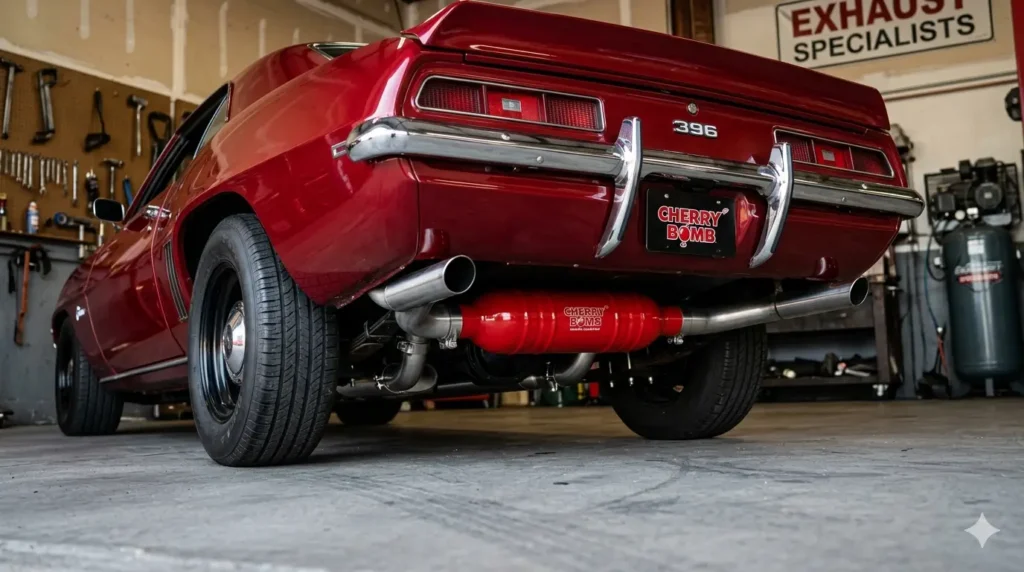
Cherry Bomb Mufflers What That Sound Actually Costs You
The name predates most of the cars it’s installed on now — Cherry Bomb has been a fixture in muscle car culture since long before “aftermarket exhaust” was its own industry. What it does hasn’t really changed: strip out the sound-deadening a stock muffler relies on, and let more of the engine’s raw exhaust note escape instead of getting absorbed. The result is the deep, aggressive rumble people associate with classic muscle cars — along with a few tradeoffs worth knowing before you install one.
What’s Actually Happening Inside the Muffler
A stock muffler is built to quiet things down — baffles and sound-absorbing material inside it exist specifically to muffle the engine’s noise, which is the whole point of the part. A Cherry Bomb takes the opposite approach. The classic version is a glasspack design: a straight-through pipe wrapped in fiberglass packing instead of a maze of baffles. Exhaust gas moves through with far less resistance, which does two things at once — it makes the exhaust noticeably louder, and it can modestly reduce backpressure, which some drivers feel as a small bump in how freely the engine breathes.
That second part is real but easy to overstate. Don’t expect a meaningful horsepower gain from the muffler alone — the audible difference is dramatic, the performance difference is usually minor.
The Three Common Styles
Glasspack mufflers are the original and still the most recognizable — straight pipe, fiberglass packing, and the loudest, most old-school tone of the three styles. This is what most people picture when they hear “Cherry Bomb.”
Turbo mufflers dial the sound back while keeping some of the flow benefit, using an internal chamber design instead of a straight pipe. They’re the pick if you want a deeper note without drawing the attention a full glasspack setup brings.
Extreme performance mufflers push in the other direction — built for drivers who specifically want the loudest exhaust they can legally (or not-so-legally) run, and typically found on dedicated performance builds rather than daily drivers.
Check the Law Before You Check the Price
This is the step people skip most often, and it’s the one that actually matters. Noise ordinances vary a lot by city and state — some areas set a hard decibel limit for street-legal vehicles, others regulate based on visible modification to the exhaust system regardless of how loud it measures. A muffler that’s perfectly legal one county over can be a ticket, or a failed inspection, where you live. Five minutes checking your local rules costs a lot less than the fine.
Installing One Without Creating a Problem
Sizing matters more than people expect — a muffler built for a different exhaust diameter can actually choke flow rather than improve it, undoing the entire point of the upgrade. Whether you install it yourself or hand it to a shop mostly comes down to whether you’re comfortable working under the car with the exhaust system cooled down completely; hot exhaust components are one of the most common sources of burns in DIY jobs like this one. Quality clamps matter too — a loose fitting doesn’t just cause a rattle, it can develop into a leak that lets exhaust fumes into the cabin, which is a real safety issue, not a cosmetic one.
What You’re Trading For That Sound
The upside is straightforward: it’s an affordable, easy-to-source upgrade that delivers a genuinely distinctive tone and a small flow improvement. The downside is just as real — louder cabin noise on long drives, the legal exposure mentioned above, and a sound profile that some passengers (and neighbors) simply won’t enjoy. Neither side of that trade is universally right; it depends entirely on whether you’re building a weekend car you want to hear, or a daily driver you’d rather not get pulled over in.
The Bottom Line
A Cherry Bomb muffler does exactly what its reputation suggests — it makes a car sound meaningfully more aggressive for not much money, with a flow benefit that’s real but modest. The part that trips people up isn’t the installation, it’s skipping the local noise-law check beforehand. Confirm that first, size the muffler correctly for your exhaust, and the rest of the job is straightforward.
A couple of things people usually want to know:
Don’t expect a Cherry Bomb to meaningfully change your fuel economy either direction — most vehicles see no measurable difference. And if you’re deciding between styles, matching the muffler size to your specific exhaust diameter matters more for how it performs than which style you pick; the wrong size can undercut the benefit of even the best muffler on the market.