
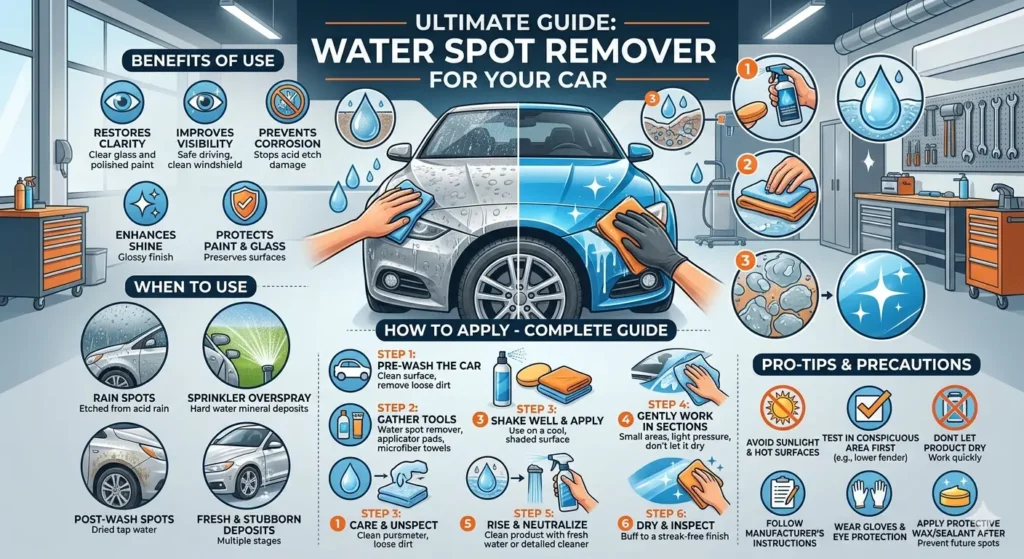
Getting Water Spots Off Your Car Without Damaging the Paint
You wash the car, step back to admire it, and there they are anyway — faint, cloudy rings scattered across the hood and windows. Those aren’t a washing failure. They’re mineral deposits, left behind after water evaporates and leaves whatever was dissolved in it sitting on the surface. Tap water, rain, even sprinkler overspray all carry enough calcium and other minerals to leave a visible film once the water’s gone, and on a clean, dark-colored car, that film shows up fast.
Why This Happens Even After a Careful Wash
The spots aren’t caused by dirty water — they show up because of what’s dissolved in otherwise clean water. Hard water carries more of these minerals than soft water, which is why water spots are a bigger problem in some regions than others. Once the water dries, the minerals stay behind as a thin residue, and if it sits long enough, it can etch slightly into the clear coat rather than just sitting on top of it. Caught early, spots are a surface issue. Left for weeks or months in direct sun, they become a paint issue.
Spray, Gel, or Professional Compound — Picking the Right One
Spray removers are the easiest entry point — spray on, wipe off, and they handle most everyday spots without much effort. This is the right starting point for anyone dealing with routine water spots rather than a serious buildup.
Gel removers cling to the surface longer than a spray, which gives the product more time to work on spots that have been sitting for a while. Reach for a gel when spray-and-wipe isn’t cutting through the deposit.
Professional detailing compounds are the strongest option, typically used by detailers on spots that have already started etching into the clear coat. They require more care to use correctly and aren’t the first thing to reach for on light, fresh spots.
Doing It Without Creating New Problems
Wash the car first. Treating spots through a layer of dust just grinds grit into the paint while you work.
Dry it completely before applying anything. You need to actually see which spots remain — a still-wet surface hides the ones the product needs to target.
Work in the shade, never direct sun. Heat makes these products dry too fast, and a product that dries mid-application tends to leave streaking that’s arguably worse than the spot you started with.
Test an inconspicuous area first, especially with anything acidic or a product you haven’t used before. This takes thirty seconds and avoids a much bigger problem if the product reacts badly with your specific clear coat.
Finish with a coat of wax. It won’t make the car spot-proof, but a fresh wax layer gives future water less to bond to, which noticeably slows how fast new spots form.
The Mistakes That Make This Harder Than It Needs to Be
Waiting is the biggest one — a fresh water spot wipes away easily, while the same spot after weeks of sun exposure may have already etched the clear coat, at which point a simple remover won’t fully fix it. Using a rough towel or an old rag is the second — anything less than a proper microfiber cloth risks fine scratches on top of the spots you’re trying to remove. And working in full sun is the third, since heat defeats the product before it has time to actually break down the minerals.
The Bottom Line
Water spots are a mineral residue problem, not a dirt problem, which is why plain washing alone doesn’t always clear them. Catch them early, work in the shade with a proper microfiber towel, and finish with wax to slow the next round from forming. The products themselves are simple to use — the timing and technique are what actually determine the result.
A couple of things people usually want to know:
Diluted white vinegar can help with very light, fresh spots, but it’s mild compared to a dedicated remover and worth testing on a small area first, since acidity that’s safe on one clear coat isn’t guaranteed safe on another. And yes, hard water is the main reason some regions deal with this far more than others — if you’re washing with hard tap water regularly, a quick dry with a towel right after rinsing prevents most spots before they ever have the chance to form.