
Car Care and Vehicle Maintenance Complete Guide
Most car trouble doesn’t start with a dramatic breakdown on the highway — it starts small. A slightly dimmer headlight. Oil that’s a shade darker than it should be. A faint squeak from the brakes on a quiet street. Catch those signals early and a repair stays cheap and simple. Ignore them, and they tend to snowball into the kind of bill that ruins a weekend. Good vehicle maintenance isn’t complicated; it’s just consistent.
Why Regular Maintenance Actually Matters
A car takes a beating every single day — heat, rain, dust, potholes, stop-and-go traffic — and none of that lets up just because you’re busy. Routine maintenance is what catches the wear before it becomes a failure. The payoff shows up in a few concrete ways: better safety on the road, more efficient fuel use, a longer overall lifespan for the vehicle, fewer surprise breakdowns, stronger day-to-day performance, and — maybe most convincingly — lower total repair costs over time.
That last point is worth sitting with. Clean oil protects an engine that would otherwise wear down internally. Good tires are the only thing actually connecting the car to the road, so their condition affects grip and control more than almost anything else. Strong brakes are what let a driver stop safely when it counts. None of these are optional extras — they’re the fundamentals that keep everything else working.
The Money Math Behind Preventive Care
Here’s the pattern that plays out again and again in auto shops: a small, routine service catches a problem while it’s still cheap to fix. Skip that service, and the same problem festers until it takes out a much more expensive part alongside it. A $40 oil change today beats a $4,000 engine rebuild later. That gap is exactly why experienced drivers stick to a maintenance schedule rather than waiting for something to go visibly wrong.
The Services Worth Knowing About
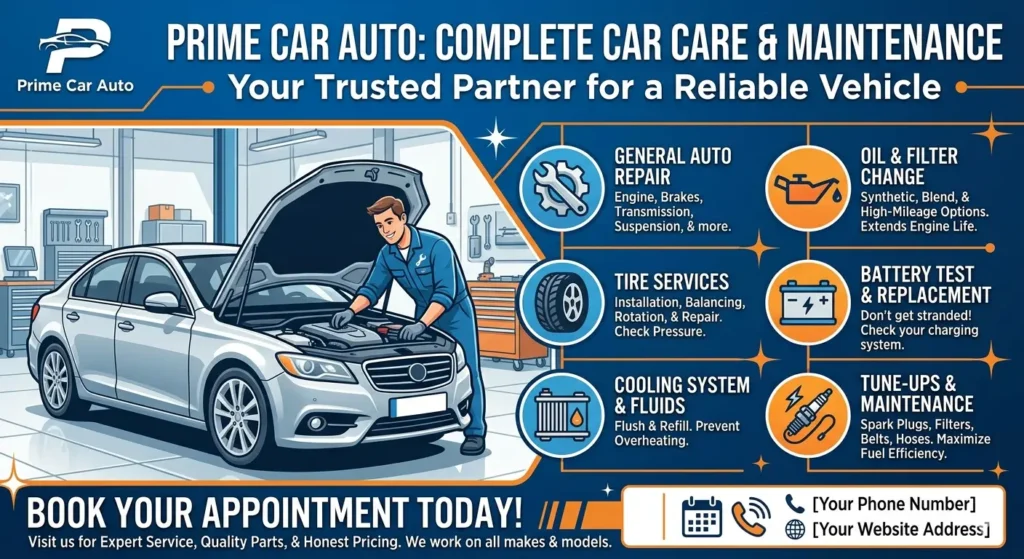
Most auto shops offer a fairly standard menu of care: oil changes, tire service, brake repair, battery testing, engine checks, wheel alignment, fluid replacement, air filter changes, and general vehicle inspections. Each one targets a different system, but together they cover the parts of a car most likely to fail quietly if left unchecked.
Engine Oil: The Single Biggest Factor in Engine Health
Oil does one critical job — it keeps moving metal parts from grinding against each other and wearing down prematurely. Once it gets dirty or breaks down, it stops doing that job effectively, and the engine starts absorbing damage it wouldn’t otherwise take. A few signs point to oil that needs changing: it looks noticeably dark, the engine sounds rougher than usual, a warning light comes on, or the car just feels less smooth to drive. Staying ahead of oil changes is one of the cheapest ways to protect an engine’s long-term health.
Tires: Where Safety Actually Meets the Road
Every bit of control a driver has — braking, cornering, accelerating — passes through four small contact patches of rubber. That makes tire care far more important than most people treat it. The basics are simple: check air pressure regularly, rotate tires on schedule so they wear evenly, watch for uneven or excessive tread wear, and replace anything that’s damaged or past its safe life. Well-maintained tires don’t just improve safety — they noticeably smooth out the ride too.
Brakes: No Room for Delay
Brakes are the one system where “I’ll get to it later” genuinely isn’t a safe option. Every driver depends on them working correctly, every time. A few warning signs deserve immediate attention rather than a wait-and-see approach: squeaking when braking, grinding that suggests the pads have worn through, a brake pedal that feels softer or spongier than normal, or a stopping distance that seems longer than it used to be. None of these fix themselves, and all of them tend to get worse — and more expensive — the longer they’re ignored.
Keeping the Battery From Failing at the Worst Time
A weak battery has a habit of dying at the least convenient moment — a cold morning, a rush to leave, a parking lot with no one around to help. Watching for early signs helps avoid that scenario: the engine cranking more slowly than usual when starting, headlights that seem dimmer than they should, or a dashboard warning specifically about battery or charging. A yearly battery test catches degradation before it turns into a dead battery on a random Tuesday.
Other Signs a Car Is Asking for Attention
Beyond the systems above, a car tends to broadcast trouble in a few consistent ways: strange or new noises, illuminated warning lights, fuel economy that’s noticeably worse than normal, harder-than-usual starting, burning smells, or vibration and shaking that wasn’t there before. None of these should get waved off as “probably nothing” — they’re usually the car’s clearest way of flagging a problem worth investigating before it grows.
What a Professional Shop Actually Adds
A skilled technician brings something a quick glance under the hood can’t — genuine diagnostic knowledge of how these systems interact, and the tools to find problems that aren’t visible on the surface. That translates into real safety gains, since experts know exactly what to check on brakes, tires, and other critical systems. It also means better long-term reliability, since well-maintained vehicles simply break down less often, and a longer overall vehicle lifespan, since preventive care protects the parts that would otherwise wear out early. All of that adds up to lower repair costs over the life of the car, since catching problems early consistently costs less than fixing them after they’ve escalated.
A Rough Maintenance Schedule to Work From
| Service | Suggested Timing |
|---|---|
| Oil Change | Every few months |
| Tire Rotation | Regularly |
| Brake Check | At every service visit |
| Battery Test | Once a year |
| Air Filter Check | Regularly |
| Fluid Check | Frequently |
| Vehicle Inspection | As recommended by your manual |
Every vehicle is a little different, so treat this as a general guide and defer to your owner’s manual for exact intervals — manufacturers calibrate these numbers to the specific engine and components in your car.
Finding an Auto Shop Worth Trusting
Not every repair shop operates the same way, and the difference shows up fast once something actually goes wrong. Look for a shop with friendly, approachable staff, clear and upfront pricing, technicians who explain problems honestly rather than upselling unnecessary work, solid reviews from other customers, genuinely skilled mechanics, and a clean, well-organized facility. Ask questions before agreeing to any repair — a shop worth using will walk you through exactly what’s wrong and why, without getting defensive or vague.
Small Habits That Add Up
A handful of low-effort habits, done consistently, prevent a surprising number of major repairs: checking tire pressure regularly, paying attention to dashboard warning lights the moment they appear, staying on schedule with oil changes, listening for anything that sounds off, washing the car regularly (it protects more than just the paint), keeping fluids topped off, and booking inspections rather than skipping them when the car “seems fine.”
Adjusting Care by Season
Cars face different stresses depending on the time of year, and adjusting your routine accordingly helps head off season-specific problems. In hot weather, keep an eye on coolant levels, inspect tires more often since heat accelerates wear, and watch engine temperature during long drives or heavy traffic. In cold weather, test the battery early since cold weather is what typically finishes off an already-weakening one, check tire condition since cold rubber behaves differently, and keep basic emergency supplies in the car in case of an unexpected breakdown.
The Bottom Line
Solid vehicle maintenance comes down to consistency, not complexity. Oil changes protect the engine. Tire care keeps you in control. Brake checks keep everyone on the road safer. Battery testing prevents the kind of morning surprise nobody wants. None of these require deep mechanical knowledge — just a habit of paying attention and acting on small warning signs before they become large ones. Do that consistently, and a car tends to stay reliable, safe, and considerably cheaper to own over time.
Frequently Asked Questions
What falls under general car care and maintenance? It covers routine services — oil changes, tire care, brake checks, battery testing, and inspections — aimed at keeping a vehicle safe and reliable.
Why does regular maintenance matter so much? It catches small issues early, before they turn into expensive repairs or safety hazards.
How often should oil actually get changed? It varies by vehicle and oil type, so the owner’s manual is the most reliable source for the exact interval.
Why do brakes squeak in the first place? Squeaking usually means the brake pads or related components need inspection, and possibly replacement.
What’s the best way to make a car last longer? Sticking to a consistent maintenance schedule rather than reacting only when something breaks.
Why bother rotating tires? It spreads wear evenly across all four tires, which extends their usable life and improves handling.
What usually triggers a dashboard warning light? It’s the car’s way of flagging that some system needs attention, ranging from minor to urgent depending on the light.
How often should the battery get tested? At least once a year, ideally before the coldest part of winter arrives.
Does regular maintenance genuinely save money? Yes — consistently, since catching small issues early is almost always cheaper than fixing major failures later.
How do I know if an auto shop is trustworthy? Look for transparent pricing, honest explanations, strong reviews, and technicians willing to answer questions before starting work.