
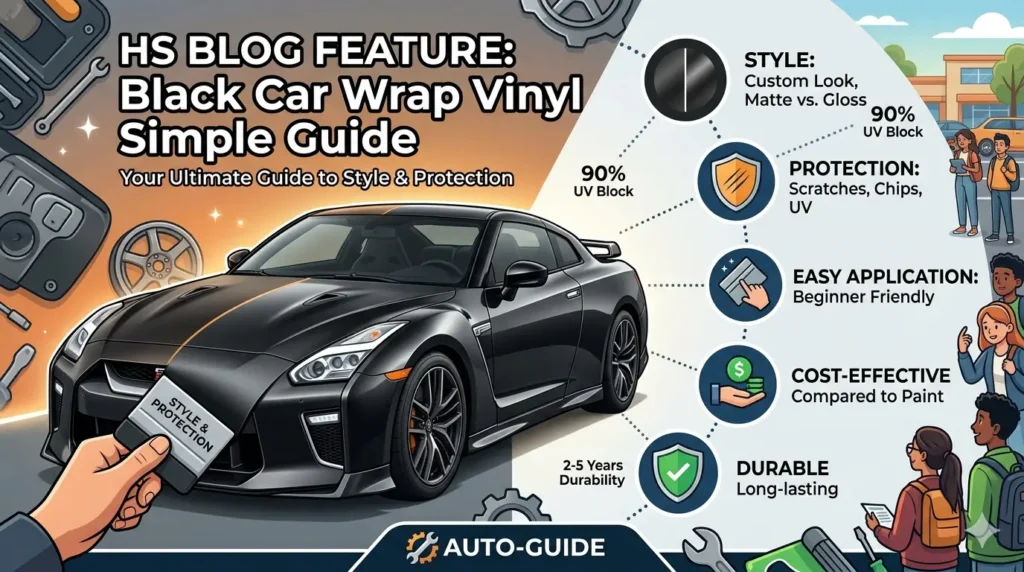
Black Car Wrap Vinyl Everything to Know Before You Commit
There’s a reason black wraps dominate car meets, dealership showrooms, and Instagram feeds alike — they’re one of the few upgrades that manage to look both understated and aggressive at the same time. A black car wrap is a thin vinyl film applied directly over your factory paint, and depending on the finish you choose, it can make a car look freshly detailed, race-inspired, or genuinely custom-built, all without a drop of new paint touching the body.
Below is a practical breakdown: what the vinyl actually is, the finish options worth knowing, real costs, how long it holds up, and the mistakes that trip up first-time buyers most often.
The Basics
Black car wrap vinyl is a film that installers apply over the existing paint, effectively changing the car’s color without altering what’s underneath. It’s not permanent — most quality wraps can be peeled off later, leaving the original paint intact — which is a big part of why people choose it over a full respray. Beyond the visual change, the film also acts as a light barrier against everyday scuffs and minor scratches, since it’s the vinyl taking the hit rather than the paint itself.
Why Drivers Reach for It Over a Repaint
The reasoning tends to come down to a handful of practical points: it’s usually cheaper than a full paint job, it’s reversible if you change your mind, it protects the paint underneath in the process, and it opens up finish options — gloss, matte, satin, textured — that a standard repaint wouldn’t easily offer. For anyone who isn’t sure they want to commit to a color forever, that flexibility alone makes wrapping the more appealing choice.
The Finish Options, Compared
Gloss black is the closest match to a fresh paint job — shiny, reflective, and instantly familiar. It’s the go-to for luxury cars and anyone wanting a clean, factory-fresh look.
Matte black trades shine for attitude. It absorbs light instead of reflecting it, giving the car a flatter, more aggressive presence — popular on performance and sports cars.
Satin black sits in the middle, with a soft sheen that’s neither flashy nor flat. It’s often described as the “safe but elegant” option, and it tends to suit daily drivers particularly well.
Carbon fiber black mimics the woven texture of actual carbon fiber. It’s mostly used on smaller accent pieces — hoods, mirrors, spoilers — to add a sporty detail rather than covering the whole car.
| Finish | Look | Best suited for |
|---|---|---|
| Gloss | Shiny, paint-like | Luxury and show cars |
| Matte | Flat, no glare | Sports and performance cars |
| Satin | Soft shine, balanced | Daily drivers |
| Carbon fiber | Textured, sporty | Accent panels |
What Installation Actually Involves
A proper wrap job follows a fairly disciplined sequence: the car gets thoroughly cleaned, the installer inspects the paint underneath for existing damage (since wrapping over chips or dents locks those imperfections in), the vinyl is applied section by section with specialized tools, trapped air gets worked out to avoid bubbling, and a final inspection catches any missed spots or lifting edges before the car leaves the shop. Skipping any of these steps — especially the paint inspection or the bubble removal — is usually where bad wrap jobs come from.
Many owners don’t wrap the entire car. Partial wraps on the hood, roof, mirrors, doors, or trunk are common, cost less than a full wrap, and can create a distinct two-tone look that a solid color can’t.
What It’s Going to Cost You
Pricing depends on vehicle size, the vinyl grade you choose, labor rates in your area, and how complex the design is. A small hatchback will cost noticeably less to wrap than a full-size SUV, and premium vinyl brands push the price up further. Getting a handful of quotes before booking is the only reliable way to know if you’re paying a fair rate — prices for the same job can vary more than people expect between shops.
How Long a Wrap Actually Lasts
Most quality wraps hold up for several years, though the real-world lifespan depends heavily on sun exposure, climate, and how well the car is maintained. Cars parked outdoors in intense sun will see faster fading than ones garaged regularly. Cheaper vinyl and rushed installation both shorten the lifespan considerably, so the two biggest levers you actually control are the material quality and who installs it.
Keeping the Wrap Looking Sharp
Hand-wash regularly rather than letting dirt build up, stick to wrap-safe cleaning products instead of harsh chemicals, wipe off bird droppings and tree sap quickly before they etch into the film, avoid rough scrubbing or abrasive tools, and park in shade whenever it’s practical. None of this is demanding, but consistency is what separates a wrap that still looks new after three years from one that’s visibly faded after one summer.
DIY or Hire a Pro?
Small pieces — mirrors, a roof section, interior trim — are reasonable starting points for a confident DIYer. Wrapping an entire vehicle is a different story; it’s genuinely easy to end up with wrinkles, trapped air bubbles, crooked panel lines, or lifting edges if you haven’t done it before. Unless you’re comfortable accepting a rougher result on your first attempt, a full-body wrap is worth leaving to an experienced installer.
Common Myths, Cleared Up
A few misconceptions come up constantly. Wraps don’t damage healthy paint — done properly, they protect it. They don’t only last a year — quality vinyl with decent care routinely lasts several. Black wraps don’t automatically fade fast — that’s mostly a function of vinyl quality and sun exposure, not the color itself. And a well-installed wrap rarely looks “cheap” — plenty of people mistake a clean wrap job for factory paint at a glance.
Signs It’s Time to Replace It
Watch for peeling edges, visibly fading color, cracking, deep scratches through the film, or sections that have started lifting away from the body. None of these are emergencies on their own, but letting them sit tends to make the eventual repair more expensive than catching it early.
Is It Actually Worth It?
That depends on what you’re after. If the goal is a fresh look, some added paint protection, and the flexibility to change your mind down the road without committing to a repaint, a wrap checks all three boxes. If you’re chasing a truly permanent, showroom-perfect finish that will never need touch-ups or replacement, paint is still the more durable long-term choice. For most drivers weighing style against cost and flexibility, though, wrapping wins out.
Before You Book, Check This
- Compare quotes from at least three installers, not just one.
- Ask specifically about the vinyl brand and grade being used.
- Look at the installer’s past work, not just their pricing.
- Check whether a warranty is included, and what it actually covers.
- Have your paint inspected first — hidden damage under a wrap can cause bigger issues later.
Final Thoughts
Black car wrap vinyl remains one of the fastest, most flexible ways to change how a car looks without touching the original paint. Whether you go gloss for a luxury feel, matte for something more aggressive, or satin for a middle ground, the finish you choose says a lot about the look you’re going for. Pair a quality vinyl with a skilled installer and reasonable upkeep, and it’s realistic to get several years of sharp appearance out of the investment.
Quick Questions, Straight Answers
Does it damage the paint underneath? No — a properly applied wrap generally protects the paint rather than harming it.
How long does it typically last? Several years, with quality vinyl and consistent care being the biggest factors.
Is it cheaper than a full repaint? Usually, though the exact gap depends on your vehicle and the vinyl grade chosen.
Can it be removed later? Yes, most wraps come off cleanly without damaging the paint beneath, assuming it was healthy going in.
Which finish is most popular? Gloss black remains the most requested option, largely because it reads as a factory-fresh color.
Is washing a wrapped car safe? Yes, as long as you stick to gentle products and avoid abrasive scrubbing.
Should I attempt this myself? Small accent pieces are fine for a first attempt; a full vehicle wrap is best left to an experienced installer.