Anime Car Wrap Complete Guide to Turning Your Car Into a Canvas
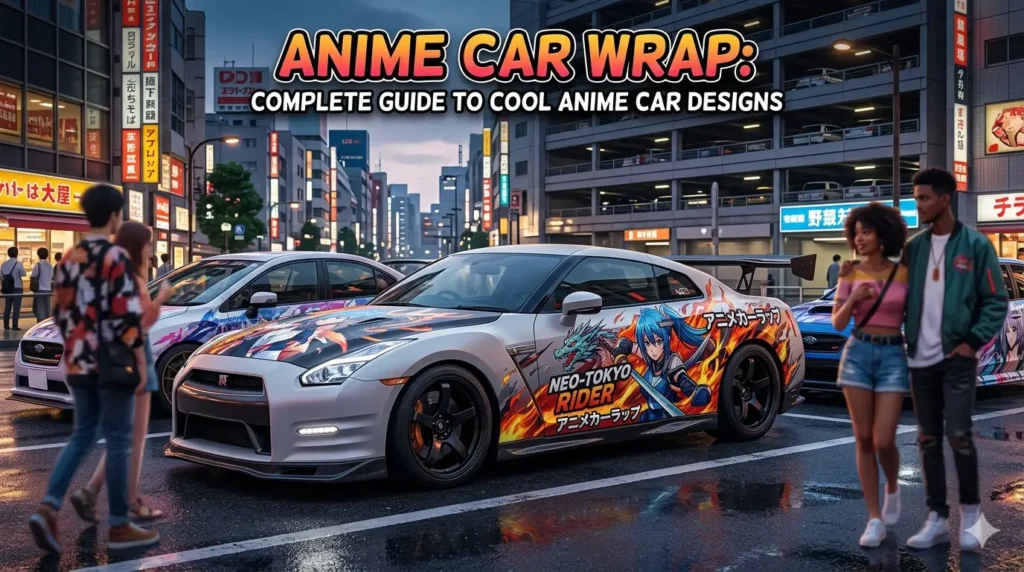
Walk through any car meet or anime convention parking lot, and sooner or later you’ll spot one — a car covered top to bottom in vivid, printed artwork instead of factory paint. These are known as “itasha” cars, a term that started in Japan and has since spread to fan communities worldwide. An anime car wrap is how it’s done: a large printed vinyl sheet applied over the body, turning an ordinary vehicle into a rolling piece of fan art.
This guide covers what these wraps actually are, the styles fans go for, what they cost, and the mistakes worth avoiding before you commit your car to one.
What Exactly Is an Anime Car Wrap?
At its core, it’s a printed vinyl sheet applied directly over your car’s paint. Installers can cover the entire vehicle or just select panels — hood, doors, roof, rear — depending on how bold you want the result. The artwork itself can be anything from a single favorite character to a full manga panel scene, logos, or original Japanese-style graphics.
Why Fans Are Drawn to Them
The appeal is pretty simple: it’s a way to carry a hobby you love out into the real world. Anime fans get to show off a favorite series in a way a T-shirt or sticker never quite matches, and the visual impact is immediate — bright colors, bold characters, and designs that range from playful to genuinely striking. At conventions and car meets, wrapped cars tend to draw crowds and become the backdrop for a lot of photos.
There’s a practical upside too. The vinyl layer sits over your factory paint and can shield it from minor scratches and stone chips, so beyond the aesthetics, you’re getting a bit of extra protection along the way.
Choosing a Style
Not every wrap has to cover the whole car. Here’s how the main approaches differ:
Full wrap covers nearly the entire vehicle and delivers the biggest visual statement — this is what most show cars go with.
Partial wrap sticks to specific panels like the hood, doors, or rear, which usually costs less while still making a clear statement.
Character wrap puts the spotlight on a single favorite character, rendered large across the body.
Scene wrap recreates a moment from the show — closer to a moving illustration than a simple graphic.
Logo wrap keeps things minimal, using symbols or emblems rather than full artwork, for fans who want something more subtle.
Picking the Right Design
If you’re stuck on ideas, character choice tends to fall into a few crowd favorites — Naruto, Luffy, Goku, Sailor Moon, and Tanjiro all show up often, mostly because they’re instantly recognizable even from a distance. Beyond specific characters, popular themes include racing aesthetics, neon color schemes, cute/kawaii styles, fantasy art, and Japanese street culture graphics. There’s no wrong answer here — it comes down to what you’ll still be excited about a year or two from now.
How the Installation Actually Happens
The process itself isn’t complicated, but it does demand a skilled installer:
- Finalize the design and artwork.
- Measure the vehicle precisely.
- Print the artwork at full scale.
- Prep the car’s surface (clean, degrease).
- Apply the vinyl panel by panel.
- Work out air bubbles as it’s applied.
- Finish and seal the edges.
A rushed job at any of these steps — especially the surface prep or edge finishing — is usually what separates a wrap that looks sharp for years from one that starts peeling within months.
What You’ll Actually Pay
Cost swings based on a few clear factors: how much of the car you’re covering, how detailed the artwork is, the quality of vinyl used, and the installer’s labor. A partial wrap on one or two panels will run noticeably less than a full-body job, and custom artwork (rather than a stock design) adds to the price. Professional installation costs more than a DIY attempt, but it’s also where quality tends to show the most.
The Real Benefits
Beyond looking distinctive, a wrap protects your factory paint from minor wear, and most wraps can be removed later without permanent damage — which makes it easier to update the design or sell the car down the line without a repaint. It’s also genuinely useful for anyone who attends conventions or car shows regularly, since a well-done wrap photographs well and tends to draw attention on its own.
Before You Commit
A few honest questions are worth asking yourself first: Will you still like this design in two or three years, or is it tied to a trend? Does the color scheme actually suit your car’s shape and lines? Has the installer done wraps like this before, with examples to show? Is the vinyl a known, quality brand rather than the cheapest option available? And realistically, what’s your total budget once design, printing, and labor are all included?
Skipping these questions is how people end up with a wrap they regret within a year.
Keeping It Looking Good
Vinyl wraps need gentler care than paint. Hand-wash rather than pressure-wash where possible, use soft microfiber cloths, wipe off dirt and bird droppings quickly before they set in, park in shade when you can, and skip harsh or abrasive cleaning chemicals. None of this is complicated, but skipping it is the fastest way to dull the colors early.
What’s Trending Right Now
Current favorites lean toward neon palettes, holographic finishes, manga-panel-style layouts, minimalist single-character designs, racing-inspired graphics, and broader Japanese street culture aesthetics. Trends shift year to year, so if longevity matters to you more than being current, a simpler design tends to age better than a hyper-trendy one.
Quick Reference
| Feature | Details |
|---|---|
| Material | Printed vinyl |
| Purpose | Visual customization plus light paint protection |
| Customization | Fully custom artwork available |
| Removable | Usually yes, without damaging paint |
| Most popular style | Full-body wrap |
| Best suited for | Anime fans, show cars, convention-goers |
| Maintenance | Gentle hand-washing, minimal upkeep |
Trade-Offs to Weigh
A wrap gives you a genuinely unique look, adds a layer of paint protection, and offers near-unlimited design options — but it’s not free, it does need some ongoing care, and a poor installation job can cause real problems (bubbling, peeling, uneven edges). Vinyl quality also varies a lot between suppliers, so cutting corners here tends to show up later.
Mistakes to Avoid
The most common regrets come from a small set of avoidable choices: going with cheap vinyl to save money, using low-resolution artwork that looks blurry once printed at full size, neglecting maintenance after installation, choosing a design impulsively without sitting with it for a while, and hiring an installer without checking their previous work first.
Final Thoughts
An anime car wrap is one of the more fun, expressive ways to make a car genuinely your own — it turns a daily driver into a piece of art fans actually notice. Done well, with quality vinyl, a design you’ll still love in a few years, and an installer who knows what they’re doing, it can look sharp for a long time while quietly protecting the paint underneath. Get any of those three wrong, though, and the results show fast.
Quick Questions, Straight Answers
Does it damage the paint underneath? No — quality vinyl generally protects the paint rather than harming it.
How long does a wrap typically last? Several years, assuming reasonable care and a decent installation.
Can it be removed later? Yes, most wraps come off cleanly without damaging the paint beneath.
Are these expensive? It depends entirely on size and design complexity — a partial wrap costs far less than a full one.
Can I use a completely custom design? Yes, most wrap shops offer fully custom artwork rather than just stock templates.
Will the colors fade over time? They can, especially without proper care and if the car sits in direct sun often.
Is this popular outside Japan? Very much so — itasha-style wraps have a strong following among anime fans globally.