
Auto Lift Car Lift: A Complete Guide to Lifting Vehicles Safely
Crawling under a car balanced on a jack is one of the fastest ways to turn a routine repair into a genuine safety hazard. A proper auto lift solves that problem entirely — raising the entire vehicle to a stable, accessible height so a mechanic can work standing up, with full visibility of the undercarriage, instead of lying flat and reaching blind. It’s the single piece of equipment that separates a professional shop’s workflow from a driveway repair, and increasingly, home garages are adopting them too.
What a Car Lift Actually Is
An auto lift is mechanical equipment built to raise a vehicle off the ground and hold it securely at a working height. It relies on strong structural components engineered specifically to bear a vehicle’s full weight without shifting or settling once locked in place. Mechanics use lifts for everything from quick inspections to major repairs, and most service centers — regardless of size — build their entire workflow around having one or more lifts available.
How the Lifting Process Works
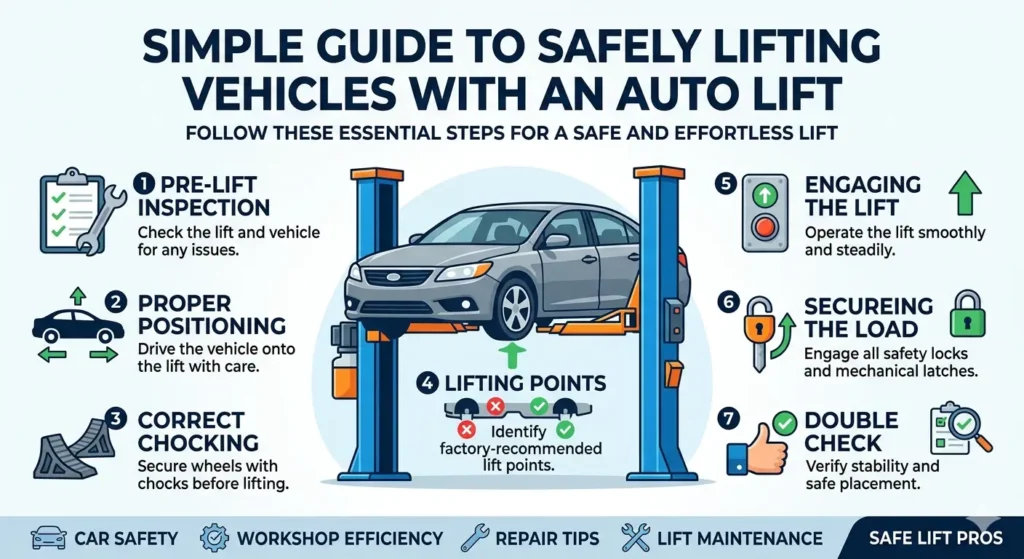
The mechanics behind a car lift are more straightforward than they might seem. Lifting power — hydraulic, electric, or a combination — raises the platform or arms supporting the vehicle. As the vehicle rises off the ground, safety locks engage to hold it firmly in position, removing any reliance on the lifting mechanism alone to keep the car steady. Once locked, a technician can move freely underneath or around the vehicle to inspect or repair it. The process itself is simple in principle, but the safety systems built into a quality lift are what actually make it trustworthy.
The Main Types of Lifts and Where Each One Fits
Different jobs call for different lift designs, and picking the right type matters more than most first-time buyers realize.
Two-post lifts use exactly what the name suggests — two vertical posts with swing arms that cradle the vehicle from the sides. This is the design most repair shops rely on daily, since it provides completely open access underneath the vehicle for brake work, exhaust repairs, and similar jobs.
Four-post lifts trade some of that open access for exceptional stability, supporting the vehicle on a full platform rather than just a few contact points. Many owners use this style specifically for long-term storage or general service work where rock-solid stability matters more than unobstructed underbody access.
Scissor lifts rise in a compact, folding motion that takes up far less floor space than a two- or four-post design, which makes them a popular choice in smaller garages where square footage is at a premium.
Portable lifts prioritize mobility above all else — they’re built to be moved, making them a practical option for home users who don’t have room for a permanently installed system, or who need flexibility in how their garage space gets used.
Why a Lift Genuinely Changes the Work
The core advantage of a lift comes down to access. Raising a vehicle to a comfortable working height means a technician isn’t fighting gravity, cramped space, or poor visibility to reach the parts that need attention. That improved access has a few concrete downstream effects: repairs move faster since there’s less time spent positioning tools or maneuvering into awkward angles, the work itself becomes safer since a properly locked lift removes the instability risk that comes with jacks and stands, and the workspace around the vehicle stays more organized since there’s simply more usable room to spread out tools and parts.
What Lifts Actually Get Used For
Car lifts show up in a wide range of everyday automotive work: oil changes, tire service, brake inspections, exhaust repairs, suspension work, and general vehicle inspections all benefit from the improved access a lift provides. For shops handling a steady stream of these jobs, a lift isn’t a luxury — it’s the equipment that makes the whole operation function efficiently.
Safety Comes First, Every Time
A lift holding several thousand pounds off the ground demands serious respect for safety procedure. A few rules matter above all else: read the equipment’s instructions thoroughly before first use, always use the manufacturer-specified lifting points rather than guessing where a vehicle can safely bear weight, check the lift’s condition regularly rather than assuming it’s fine, never exceed the rated weight limit under any circumstance, always engage the safety locks before working underneath a raised vehicle, keep the surrounding area clear of clutter, and inspect the equipment itself on a consistent schedule rather than only when something seems off.
Figuring Out Which Lift Fits Your Situation
Before buying, work through a few practical questions. What types and sizes of vehicles will actually go on this lift? How much floor and ceiling space is realistically available? What weight capacity do you need, accounting for the heaviest vehicle you’re likely to lift? Will the lift be permanently installed, or does it need to move? And how frequently will it actually get used — daily shop work calls for a different investment than occasional home projects. Working through these questions honestly narrows the field far faster than browsing specs alone.
Keeping a Lift in Safe Working Condition
Like any piece of load-bearing equipment, a lift needs consistent upkeep to stay trustworthy. Regularly check cables for fraying or wear, inspect the locking mechanisms to confirm they’re engaging properly, look over the structure for any signs of damage or stress, keep moving parts lubricated according to the manufacturer’s schedule, and clean the equipment periodically so buildup doesn’t mask developing problems. Catching a small issue during routine maintenance is always better than discovering it while a vehicle is suspended overhead.
A Quick Reference by Use Case
| Lift Type | Best Suited For |
|---|---|
| Two-Post Lift | General repairs |
| Four-Post Lift | Storage and service |
| Scissor Lift | Smaller spaces |
| Portable Lift | Flexible, movable use |
| Hydraulic Lift | Heavy-duty lifting |
| Home Lift | Personal garage use |
| Shop Lift | Daily professional service |
Who Actually Relies on These Systems
Car lifts see use across a wide range of settings — professional mechanics running daily repairs, full-service repair shops, vehicle inspectors evaluating condition and safety, car collectors maintaining or restoring vehicles, garage owners setting up a serious home workspace, and automotive businesses of all sizes. Each group draws on the same core benefit — better access and safer working conditions — even though their specific use cases differ.
What to Verify Before Buying
A handful of details deserve close attention before committing to a purchase: the lift’s rated capacity relative to your heaviest vehicle, the safety features built into the design, overall build quality and materials, what warranty coverage is actually included, how much space the installation genuinely requires, and what the installation process itself involves — some lifts are straightforward to set up, while others call for professional installation. Taking the time to verify these details upfront prevents a costly mismatch down the line.
The Bottom Line
An auto lift transforms how vehicle work gets done — trading cramped, risky positions under a jacked-up car for standing, well-lit access to the entire undercarriage. Choosing the right type for your space and needs, following safety procedures without shortcuts, and keeping the equipment properly maintained are what let a lift deliver on its full potential for years of reliable use, whether it’s running in a busy shop or a well-equipped home garage.
Frequently Asked Questions
What exactly is an auto lift or car lift? It’s mechanical equipment designed to raise a vehicle off the ground and hold it securely at a workable height.
Why do mechanics rely on car lifts so heavily? They make repairs both easier and considerably safer by providing full, stable access to the underside of a vehicle.
What defines a two-post lift? A lift design using two vertical support posts with swing arms that cradle the vehicle from the sides.
What defines a four-post lift? A lift built on four support posts, offering a full platform and exceptional stability.
Are car lifts actually safe to use? Yes, provided they’re used correctly, within their rated capacity, and maintained on a consistent schedule.
Can a car lift work in a home garage? Yes — many homeowners install a properly sized lift for personal projects and maintenance.
How often should a lift be inspected? Regularly, ideally on a set schedule rather than only when something seems visibly wrong.
What kinds of jobs does a car lift make easier? Oil changes, tire work, brake inspections, exhaust repairs, and general vehicle inspections all benefit significantly.
Do car lifts require ongoing maintenance? Yes — cables, locks, and moving parts all need periodic checks to stay safe and reliable.
How do I pick the right lift for my needs? Consider the vehicles you’ll lift, available space, required weight capacity, and how often you’ll actually use it.