
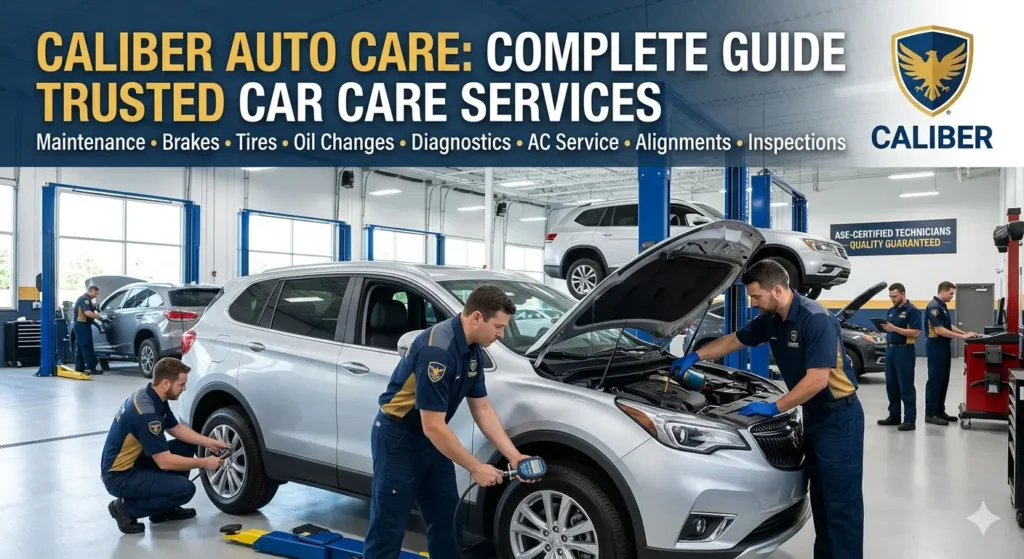
Caliber Auto Care: A Service-by-Service Guide to What Your Car Actually Needs
Most drivers don’t think about their car until something forces them to — a warning light, a strange noise, a squeak that wasn’t there last week. A full-service auto care provider exists precisely for that gap between “everything’s fine” and “something’s clearly wrong,” covering the routine work that prevents problems and the diagnostic work that catches them early. This guide breaks down the core services one at a time — what each one actually does, and the specific signs that tell you it’s time to book it.
The Full Range of What’s on Offer
A comprehensive auto care provider typically covers oil changes, tire rotation and replacement, brake service, battery checks, wheel alignment, vehicle inspections, fluid replacement, air filter swaps, and general repair work. The real convenience isn’t any single item on that list — it’s being able to handle nearly everything a car needs in one place, rather than juggling separate specialists for each system.
Oil Changes: The Service That Protects Everything Else
Oil’s job is simple but critical — it keeps the engine’s internal moving parts from grinding against each other and wearing down prematurely. Fresh oil does that job well. Old, degraded oil does it poorly, and the longer degraded oil stays in an engine, the more cumulative wear it allows.
A few signs point to an oil change being overdue: the oil itself looks noticeably dark on the dipstick, a warning light appears on the dashboard, the engine starts sounding louder or rougher than usual, or you’ve simply passed the interval recommended in your owner’s manual. Staying ahead of this one service does more to protect long-term engine health than almost anything else on the maintenance list.
Tire Services: Where Grip and Safety Actually Live
Tires are the only part of a car actually touching the road, which makes their condition disproportionately important to overall safety. A full tire service typically covers inspection, rotation, balancing, replacement, and pressure checks — each targeting a different aspect of tire health.
Watch for a few specific warning signs: tread depth that’s dropped noticeably low, wear that’s uneven across the tire’s surface, vibration while driving that wasn’t there before, visible cracks in the rubber, or a tire that keeps losing air faster than it should. Any of these is worth addressing before it turns into a blowout or a loss of control in wet conditions.
Brake Service: The One System With No Room for Delay
Brakes are non-negotiable — every other system on a car can degrade gradually without immediate danger, but worn brakes shrink the margin for error in exactly the moments that margin matters most. Standard brake services include inspections, pad replacement, rotor service, and fluid checks.
The warning signs here are worth memorizing: squeaking during normal braking, grinding that usually means pads have worn through to metal, a brake pedal that feels softer or sinks further than it should, or a vehicle that pulls noticeably to one side when braking. None of these situations improve with time — they escalate, both in risk and in eventual repair cost.
Battery Services: Preventing the Morning You Don’t See Coming
A weak battery has an unfortunate habit of failing without much notice — often on the coldest morning of the year, when the strain of starting a cold engine finally exposes what was already a dying battery. Battery services generally include testing, replacement, and checks on the broader charging system, since a battery problem sometimes traces back to the alternator rather than the battery itself.
A few signs suggest a battery is on its way out: the engine cranking noticeably slower than usual when starting, headlights or interior lights that seem dimmer than normal, a battery-specific warning light, or unexplained electrical glitches around the car. Testing a battery before winter hits is one of the cheapest ways to avoid an inconvenient dead-battery morning.
Vehicle Inspections: Catching What You Can’t See Yourself
A thorough inspection goes beyond what a driver notices day to day, checking tires, brakes, battery, belts, fluids, and suspension components for wear that isn’t yet causing obvious symptoms. This is where a lot of real value sits — catching a worn belt or a leaking seal before it fails outright almost always costs less than dealing with the breakdown it would otherwise cause.
What Actually Makes a Provider Worth Using
A few things separate a genuinely useful auto care provider from one that’s just convenient. Having a wide range of services under one roof saves real time — fewer separate trips, fewer different shops to coordinate with. Trained technicians bring expertise that catches problems a casual look wouldn’t. A focus on preventive maintenance, not just reactive repair, tends to keep costs lower over the life of a vehicle. Built-in vehicle inspections mean safety issues get flagged before they become emergencies. And handling several services in one visit is simply more efficient than spreading maintenance across multiple appointments and multiple shops.
Some providers also offer structured maintenance plans that help drivers stay on schedule automatically rather than relying on memory — worth asking about if you tend to lose track of when the last service happened.
How Often Is Actually Often Enough
Service intervals vary by vehicle and driving habits, but a few general habits apply broadly: check tire pressure monthly, change oil according to the manufacturer’s schedule rather than a generic timeline, inspect brakes on a regular basis rather than waiting for a warning sign, test the battery yearly, and replace worn components promptly rather than pushing them past their useful life. Your specific owner’s manual should always take priority over general guidelines, since manufacturers calibrate these intervals to the exact engine and components in your vehicle.
| Service | Why It Matters | Suggested Frequency |
|---|---|---|
| Oil Change | Protects the engine | Follow your manual |
| Tire Rotation | Promotes even wear | Every few months |
| Brake Inspection | Improves safety | Regularly |
| Battery Test | Prevents unexpected failures | Yearly |
| Fluid Check | Protects vehicle systems | Regularly |
| Air Filter Check | Improves airflow | As needed |
Small Habits That Complement Professional Service
Regular shop visits work best alongside a handful of everyday habits: checking tire pressure routinely, paying attention to dashboard warning lights the moment they appear, keeping fluids topped off, listening for any sound that feels new or different, scheduling maintenance on time rather than pushing it back, and simply keeping the vehicle reasonably clean — which, beyond appearance, makes it easier to spot developing issues like rust or fluid leaks.
The Bottom Line
A full-service auto care provider earns its value by covering the entire span of what a car needs — routine upkeep that prevents problems, and diagnostic work that catches them early when something does go wrong. Oil changes protect the engine. Tire care keeps the car connected safely to the road. Brake service protects everyone in and around the vehicle. Battery testing prevents the kind of morning nobody wants. None of it requires deep technical knowledge from the driver — just consistency, attention to warning signs, and a provider capable of handling the whole picture rather than just one piece of it.
Frequently Asked Questions
What range of services does a full auto care provider typically cover? Oil changes, tire work, brake service, battery checks, alignment, inspections, and general repairs make up the core lineup.
Does a typical provider handle oil changes? Yes — it’s one of the most routine and frequently requested services at any full-service shop.
Can these providers replace tires as well as rotate them? Most locations offer both rotation and full replacement, along with balancing and pressure checks.
Are brake inspections part of standard service? Yes, brake inspection and repair are core offerings at any comprehensive auto care center.
Is battery testing something I can get done routinely? Yes — it’s a common, quick service, especially useful before extreme weather seasons.
Why do vehicle inspections matter beyond the obvious symptoms? They catch developing issues — a worn belt, a small fluid leak — before those problems cause a breakdown.
How often should engine oil actually be changed? Follow the interval specified in your vehicle’s owner’s manual rather than a generic rule of thumb.
What actually happens during a tire rotation? Technicians move each tire to a different position on the vehicle to promote even wear across all four.
Does regular maintenance genuinely prevent bigger repair bills? Yes — consistently, since catching issues early is almost always cheaper than the larger repairs that come from ignoring them.
Is this kind of provider a good fit for routine, ongoing service? Many drivers use a full-service provider specifically for that reason — it consolidates recurring maintenance into one trusted relationship.