
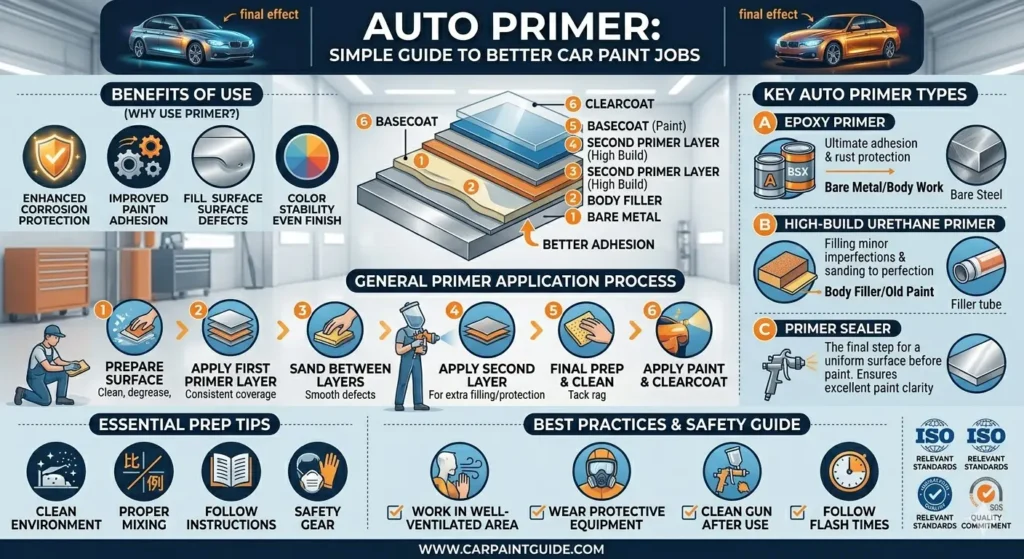
Auto Primer: Step That Decides Whether Your Paint Job Lasts
Most people judge a paint job by the color coat — that’s the part everyone sees. But the layer underneath it is usually what determines whether that color coat still looks good in two years or starts flaking off in six months. Auto primer sits between bare metal and paint, and its job isn’t cosmetic at all: it’s adhesion, protection, and a smooth base that the paint actually needs to bond to correctly.
What Primer Is Actually Doing
Paint doesn’t bond well to bare metal, old sanding marks, or a surface with tiny imperfections — primer exists to fix all three at once. It gives the topcoat something consistent to grip, seals the metal against moisture before rust has a chance to start, and fills in the kind of minor surface flaws that would otherwise telegraph straight through a fresh coat of paint. Skip it, and even expensive paint can peel, crack, or age unevenly well before it should.
Three Primers, Three Different Jobs
Etching primer is built specifically for bare metal. It contains a mild acid that lightly etches the surface, giving paint something to physically grip rather than just sit on top of. This is the starting point any time you’re working on metal that’s been sanded down to bare steel.
Epoxy primer is the heavier-duty option, valued mainly for moisture and rust resistance. It’s what most professional shops reach for when long-term protection matters more than speed — a panel that’s going to face weather and road exposure benefits from epoxy’s sealing properties more than from a lighter product.
Filler primer is thicker and designed to bridge small imperfections — light scratches, minor sanding marks, shallow dents — building them level before the color coat goes on. Reach for this one when the surface itself needs smoothing, not just sealing.
Picking the wrong one doesn’t always ruin the job, but it does show up later: filler primer on bare metal skips the corrosion protection epoxy would have given you, and epoxy on a surface that needed smoothing won’t hide the flaws a filler primer would have handled.
Applying It Correctly
Clean the surface completely first. Any grease, dust, or residue left behind gets sealed under the primer instead of removed, and it will eventually cause adhesion problems no matter how well you spray afterward.
Sand before you prime. A surface with some texture holds primer far better than one that’s perfectly smooth — this is the opposite of what people expect, but it’s why sanding always comes before priming, not after.
Spray thin, even coats rather than one heavy pass. A thick coat is more likely to run or crack as it cures, while several thin coats build coverage without that risk.
Respect the drying time on the product label. Painting over primer that hasn’t fully cured is one of the most common causes of adhesion failure down the line — the timeline feels slow in the moment but matters more than almost any other step here.
Sand lightly again once the primer’s dry, right before painting. This knocks down any texture the primer left and gives the topcoat the smoothest possible surface to land on.
Where This Job Commonly Goes Wrong
Skipping the surface cleaning is the most common failure — any contamination trapped under the primer resurfaces as an adhesion problem later, sometimes months after the job looked finished. Applying primer too thick is the second — heavy coats look fine going on but are far more prone to running or cracking as they dry. And rushing the paint step before primer has fully cured is the third; it’s the single easiest way to undo an otherwise careful job.
The Bottom Line
Primer is the unglamorous half of a paint job, but it’s doing more of the actual work than the color coat gets credit for. Match the primer type to what the surface actually needs — etching for bare metal, epoxy where rust protection matters most, filler where you’re smoothing flaws — and give it the full drying time before you paint. Most primer failures trace back to skipping prep or rushing the clock, not the product itself.
A couple of things people usually want to know:
Two to three thin coats is typical for most repair jobs, though the exact number depends on the product and how much surface correction you’re doing. And yes, most primers do offer meaningful rust protection on bare metal — epoxy primer in particular is chosen specifically for that reason on panels likely to see ongoing moisture exposure.