Auto Car Outlet A Practical Guide to Finding the Right Vehicle
Buying a car rarely feels simple, even when the process itself is straightforward. Between comparing models, weighing new against used, sorting out financing, and figuring out which features actually matter versus which ones just sound good in a brochure, it’s easy to leave a lot to chance. An auto car outlet — a dealership or sales center offering a wide range of vehicles under one roof — exists to make that comparison easier, but knowing how to actually use one well makes a real difference in what you drive away with.
What an Auto Car Outlet Actually Is
At its core, an auto car outlet is a vehicle sales center where buyers can browse, compare, and purchase cars. Some outlets specialize purely in used vehicles, others carry both new and used inventory side by side, and many carry multiple brands rather than being tied to a single manufacturer. Most also offer financing on-site, letting buyers structure payments rather than paying the full price upfront.
How the Buying Process Typically Unfolds
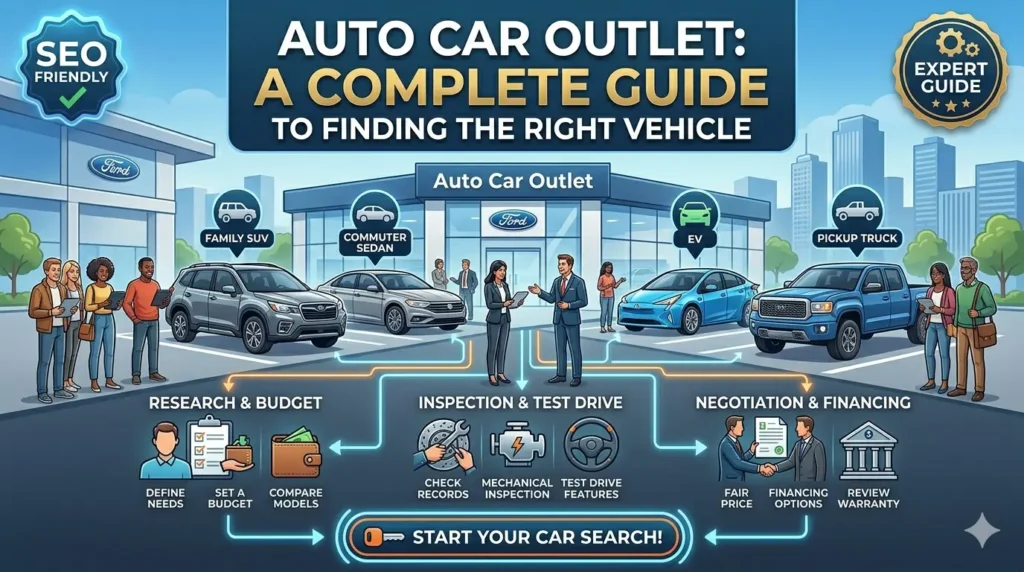
The process itself tends to follow a familiar rhythm. A buyer visits the location, browses the available inventory, and compares features and pricing across a few options that catch their interest. From there, a test drive helps confirm whether a vehicle actually feels right in practice rather than just on paper. Once a choice is made, the outlet handles the paperwork, and the purchase gets finalized. Simple in outline — though each step rewards a little extra care, which is where most of this guide focuses.
The Range of Vehicles You’ll Typically Find
Outlets generally carry a mix of vehicle categories, each suited to different priorities.
New cars come with zero prior ownership history and typically include manufacturer warranty coverage, along with the latest available technology and safety features — a strong pick for buyers who want the newest equipment and full protection from day one.
Used cars have had at least one previous owner and cost meaningfully less as a result, making them the natural choice for buyers prioritizing value over having the absolute newest model.
Certified pre-owned vehicles split the difference — these have passed a formal inspection process and often come with added protections a standard used purchase wouldn’t include, giving buyers more confidence without the full new-car price tag.
Family-oriented vehicles — SUVs, minivans, larger sedans — prioritize passenger and cargo space for buyers who need to move more people and more stuff on a regular basis.
Compact and smaller vehicles trade some of that space for better fuel economy and noticeably easier parking, which matters more to some drivers than raw capacity.
What Actually Makes Shopping at an Outlet Worthwhile
The appeal of an outlet over shopping piecemeal comes down to a few concrete advantages. A wide selection means more chances to find a genuine match for your specific needs rather than settling for whatever happens to be available at a single small lot. Because outlets often compete directly with nearby dealers, pricing tends to stay more competitive than it would in a market with fewer options. Being able to compare multiple vehicles in one visit saves real time versus driving between separate locations. And built-in financing options let buyers structure a purchase around what they can actually afford monthly, rather than needing the full price in cash upfront.
Working Out What You Actually Need
Before falling in love with a specific model, it pays to get honest about the basics. How many passengers typically ride with you, and how often? How much cargo space do you realistically need — daily errands versus regular hauling are very different requirements. What’s your actual budget, not an aspirational one? How much does fuel economy matter given your typical driving? And which safety features are genuinely important to you, versus just nice to have? Answering these clearly narrows the field far faster than browsing inventory without direction.
What to Actually Check Before Committing
A vehicle can look great in the showroom and still hide problems worth catching before you sign anything. Walk around it and check the exterior condition closely — dents, scratches, or mismatched paint can hint at prior damage. Look at tire condition too, since uneven or excessive wear says something about how the vehicle’s been driven and maintained. Ask for service history if it’s available; documented maintenance records are one of the strongest signs of a responsibly owned vehicle. And never skip the test drive — get a genuine feel for how it handles, and pay attention to any sound that seems off.
Smart Habits for the Actual Purchase
A handful of simple habits protect buyers from the most common regrets. Setting a firm budget before you start browsing keeps emotional decisions in check once you find something appealing. Comparing several vehicles rather than fixating on the first good option gives you real leverage and perspective. Reviewing a vehicle’s history — especially for used cars — surfaces information a visual inspection alone won’t catch. Taking a proper test drive, on a mix of road types if possible, tells you more than a five-minute loop around the lot. Asking questions rather than assuming reveals details that matter. Reading every piece of paperwork carefully before signing prevents unpleasant surprises later. And checking warranty details specifically — what’s covered, for how long, under what conditions — avoids assumptions that turn out to be wrong.
Quick Reference: What Different Features Offer
| Feature | Benefit |
|---|---|
| Large Inventory | More options to compare |
| Used Vehicles | Lower upfront cost |
| New Vehicles | Latest technology and full warranty |
| Financing Options | More manageable payments |
| Test Drives | Confidence in the actual decision |
| Vehicle History | Insight into past condition and care |
| Certified Vehicles | Added protection and confidence |
| Multiple Brands | Easier side-by-side comparison |
Why a Little Research Goes a Long Way
Spending even a modest amount of time researching before you shop pays off directly — it lets you compare pricing across similar models, weigh feature sets against each other, and get a realistic sense of a vehicle’s reliability track record before you’re standing on a lot with a salesperson. Buyers who walk in already informed tend to make decisions they’re more confident in afterward, rather than second-guessing the purchase once the excitement wears off.
Features Worth Prioritizing
Different buyers weigh different things, but certain features come up consistently as genuinely valuable: reliable air conditioning, modern safety systems, a backup camera, solid fuel economy for your typical driving, comfortable seating for longer trips, adequate cargo space for how you actually use the vehicle, and Bluetooth connectivity for hands-free calls and music. None of these are universal must-haves — but knowing which ones matter to you specifically helps filter a large inventory down to a realistic shortlist quickly.
The Bottom Line
An auto car outlet can genuinely simplify vehicle shopping — more selection, more room to compare, and financing that makes ownership more accessible. But the outlet itself is only half the equation. Setting a real budget, researching before you go, inspecting vehicles carefully, and never skipping the test drive are what actually turn a wide selection into a smart purchase. Approach the process with that kind of preparation, and finding the right vehicle becomes a lot less about luck and a lot more about informed choice.
Frequently Asked Questions
What exactly is an auto car outlet? It’s a vehicle sales center where buyers can browse and purchase both new and used cars, often across multiple brands.
Do these outlets typically sell used vehicles? Yes — most carry a mix of used inventory alongside new vehicles, and some specialize exclusively in used cars.
Can I buy a brand-new car at an outlet? Many outlets carry new vehicles as part of their inventory, often alongside used and certified options.
Why does a test drive matter so much? It’s the clearest way to evaluate how a vehicle actually feels and performs before committing to a purchase.
What should I check before finalizing a purchase? Overall condition, tire wear, service history, and a thorough test drive all deserve attention.
Do outlets generally offer financing? Yes — most provide financing options that let buyers spread payments out rather than paying the full price upfront.
What exactly is a certified pre-owned vehicle? A used vehicle that’s passed a formal inspection process, often bundled with added protections a standard used sale wouldn’t include.
How can I actually save money when buying? Compare pricing across several vehicles and set a firm budget before you start shopping seriously.
Does a vehicle’s history report actually matter? Yes — it reveals past ownership and maintenance patterns that a visual inspection alone can’t show.
How do I settle on the right vehicle for my situation? Match it to your real passenger and cargo needs, your actual budget, and the features that genuinely matter to your daily driving.