
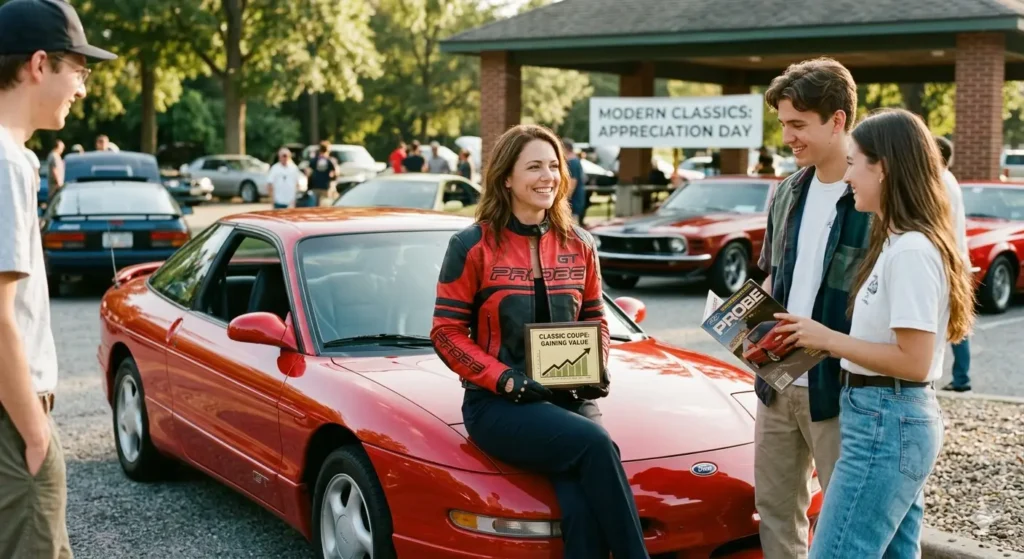
The Ford Probe Is Quietly Becoming a Collector’s Car Here’s Why
For most of its life, the Ford Probe was the car nobody took seriously. It wasn’t a Mustang, it was built on a Mazda platform, and by the time it left production in 1997, it had mostly faded into “just another ’90s coupe” territory. Fast forward a couple of decades, and something has shifted clean examples are selling for real money, enthusiast forums are actively hunting down survivors, and a car that used to be a punchline is starting to look like a legitimately smart buy for anyone chasing an affordable classic.
Here’s what’s actually driving that shift, what the Probe is worth today, and what to know if you’re considering picking one up.
What the Probe Actually Was
Ford introduced the Probe for the 1989 model year as a front-wheel-drive sports coupe developed in partnership with Mazda, effectively replacing the Ford EXP in the lineup. It ran through two distinct generations — 1989 to 1992, and a redesigned second generation from 1993 to 1997 — offering both four-cylinder and V6 engine options across manual and automatic transmissions. That Mazda collaboration is a big part of why the car earned a reputation for solid reliability, even among owners who weren’t initially sold on the idea of a “Ford” built on a Japanese platform.
Why Interest Is Picking Up Now
A few forces are converging at once to push Probe values upward. Survivor numbers have genuinely thinned out — many were modified heavily by younger owners over the years, others simply weren’t maintained, and clean, unmodified examples have become noticeably harder to find as a result. At the same time, the broader collector market has shifted its attention toward 1990s cars generally, largely driven by people now in their 40s and 50s buying back the cars they wanted (or owned) as teenagers — a nostalgia-driven demand pattern that’s played out with plenty of other ’90s models before the Probe.
Price is doing real work here too. Compared to most classic sports cars, which can run well into five or six figures even in modest condition, the Probe remains genuinely affordable — which makes it an accessible entry point for younger collectors who want something with real driving character without the price tag of a Supra or an RX-7. And the styling itself has aged better than a lot of people expected — the smooth, aerodynamic body and pop-up headlights read as distinctly of their era in a way that now feels charming rather than dated.
What Actually Made the Probe Good
Beyond the current collector interest, the Probe held up because it was a genuinely well-executed car for its time. The aerodynamic shape wasn’t just styling — it gave the car a purposeful, fast-looking presence even standing still. Mazda’s engineering involvement showed up in the car’s handling and reliability, both of which held up better than a lot of period rivals. The GT trim in particular earned real praise for its V6 power and responsive steering, and even base models offered features that felt genuinely modern at the time — power windows, air conditioning, cruise control, and decent audio systems weren’t a given across this segment in the late ’80s and early ’90s.
The Models Worth Actually Chasing
The Probe GT is the most desirable trim across both generations, and collectors specifically hunt for clean, original examples — particularly second-generation GTs running the 2.5-liter V6, which have posted some of the strongest recent sale prices in the model’s history.
GTS-package cars carry sporty upgrades that command a premium over standard trims, appealing to buyers who want the performance-oriented spec without necessarily needing the absolute rarest example.
Beyond specific trims, two factors matter more than almost anything else: mileage and originality. Lower-mileage examples consistently pull stronger offers, and unmodified, factory-spec cars tend to appreciate faster than heavily customized ones — collectors in this space generally prize originality over personalization.
What They’re Actually Worth Right Now
Current market data shows a wider range than you might expect. Rougher project cars can still be found in the $1,500 to $4,000 range, while decent drivers generally land somewhere between $4,000 and $9,000. Excellent, well-preserved examples — especially GT models — are increasingly clearing $10,000, and standout cars have sold for as much as $20,000 at auction. The average sale price across the model has climbed into the low five figures over the past couple of years, a clear signal that this is no longer the $2,000 beater market it was a decade ago.
What’s Fueling the Longer-Term Trend
Nostalgia remains the single biggest driver — buyers chasing a car they wanted or owned in their youth tend to pay a premium once they find a clean example, regardless of the car’s original reputation. Genuine rarity plays a real role too, since the pool of unmolested survivors keeps shrinking every year. And there’s a straightforward affordability argument: for collectors priced out of more established classic sports cars, the Probe offers a lower-cost way into the hobby with real upside if values keep climbing. A growing network of online owner communities and forums has also made ownership more sustainable, helping people track down parts, troubleshoot issues, and connect with other enthusiasts — support that tends to reinforce and accelerate appreciation trends once it takes hold.
Buying One Without Getting Burned
A handful of checks matter more than anything else here. Pull the vehicle history first. Inspect thoroughly for rust, which remains one of the more common issues on surviving examples. Verify maintenance records rather than taking a seller’s word for it. Test every electrical component, since interior wear and electrical gremlins are common complaints on cars this age. Look specifically for original, unmodified parts rather than aftermarket replacements. And always drive the car yourself before committing — a test drive tells you things a listing photo never will.
What It Actually Costs to Own
Compared to most classic sports cars, ongoing ownership costs stay reasonable — insurance, fuel, and routine maintenance are all in line with what you’d expect from a compact coupe rather than an exotic. Aftermarket and used parts remain fairly accessible thanks to the Mazda platform-sharing, which widens the pool of compatible components beyond just Ford-specific parts.
Where the Trade-Offs Are
The Probe’s affordability and community support are real strengths, but it’s not without downsides. Some parts are genuinely harder to source than for more mainstream classics. The front-wheel-drive layout limits its appeal to purist collectors who favor rear-wheel-drive sports coupes. Interior wear is common on higher-mileage examples, rust remains a real concern depending on region and storage history, and the aftermarket support — while decent — doesn’t match what’s available for more established Japanese sports coupes from the same era.
Getting the Most Out of Ownership
Buy the cleanest example your budget allows rather than planning to fix up a rough one — restoration costs add up fast and rarely pay back dollar-for-dollar. A GT model specifically tends to hold and grow value better than base trims. Keep detailed maintenance records from day one, since documentation matters a lot to future buyers. Avoid heavily modified cars if appreciation is part of your goal, store the car indoors when possible, and preserve original parts rather than swapping them for aftermarket upgrades — all of this protects long-term value even if you’re mainly buying for the fun of ownership.
Where This Is Likely Headed
The broader trend favoring 1990s cars shows no signs of slowing down, and clean GT models in particular look positioned for continued appreciation over the next several years. Condition remains the deciding factor above everything else — collectors will keep paying real premiums for original, well-preserved examples while rougher cars lag well behind. If the current trajectory holds, buying a clean Probe today looks a lot like buying an affordable classic before the rest of the market catches up.
Quick Questions, Straight Answers
Is the Ford Probe actually becoming collectible? Yes — interest in clean, original examples has grown noticeably as 1990s cars gain broader collector attention.
Which model commands the highest prices? The Probe GT, particularly second-generation V6 examples, consistently brings the strongest money.
Is it a reliable car to actually own? Generally yes, especially with regular maintenance — the Mazda engineering behind it has aged well.
What’s a Probe actually worth today? Anywhere from around $1,500 for a project car to $15,000-$20,000+ for an exceptional, original GT.
Are parts still available? Yes, both through Ford channels and the broader Mazda-platform aftermarket, though some components are harder to find than others.
Should I buy a modified example? Generally not if resale value matters to you — original, unmodified cars consistently hold and appreciate in value better.